
Uncategorised
Ferry Travel Versus Bike Collection for Track Days
Nov
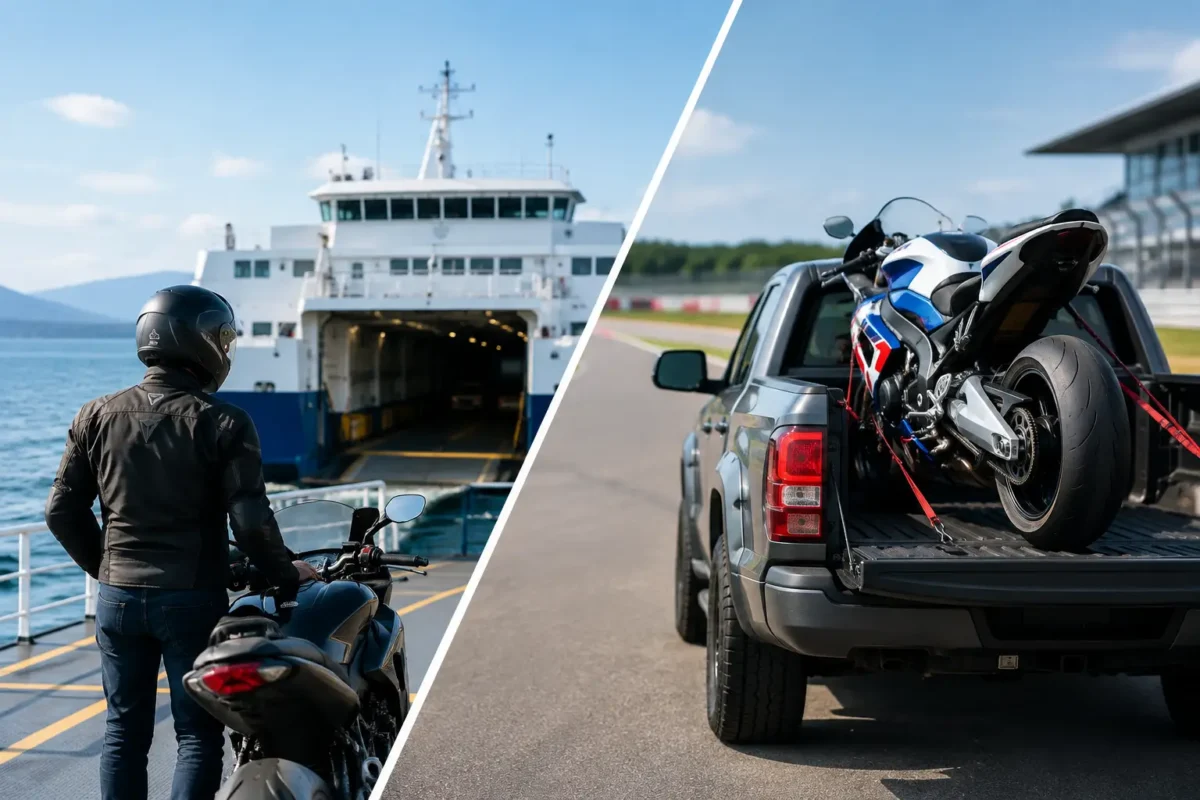
The first session of a European track day should be about brake markers, tyre temperature and finding the apex – not shaking motorway miles out of your arms after a 1,000-mile ride. Ferry travel versus bike collection is not simply a question of how you reach the circuit. It decides how much energy you arrive with, how much kit you can carry, how exposed you are to delays, and whether your focus stays where it belongs: riding faster.
For some riders, crossing the Channel under their own steam is part of the experience. For others, putting the bike into professional transport and flying out is the only sensible way to attack a multi-day event. Neither route is automatically right. The better choice depends on the circuit, the dates, your bike, your appetite for road miles and how seriously you take your track time.
Ferry travel versus bike collection: what really changes?
The ferry option gives you complete control. You load the bike, tie down your own luggage, make the crossing and ride on. If you want to build a road trip around a track event, stop in the Alps or take a different route home, it is hard to beat. Your motorcycle never leaves your sight for long, and you can leave the UK on your own schedule rather than working around a collection window.
That freedom has a cost. From Dover or the Channel Tunnel, the distance to many flagship European circuits can turn into two long days in the saddle, particularly if you are heading to Spain, Portugal, Italy, Croatia or Hungary. Add fuel, tolls, hotels, food, ferry crossings and the possibility of an extra overnight stop, and the apparent saving can disappear quickly.
Bike collection reverses the equation. Your motorcycle and track kit are collected from an agreed UK point, loaded into purpose-built transport and delivered to the circuit. You fly out closer to the event, arrive with more in the tank and leave the road miles to the logistics team. It is the performance-led option for riders who see the journey as a means to get more from the circuit, rather than an adventure in its own right.
The trade-off is less spontaneity. Your bike needs to be ready by the collection deadline. Anything you want at the circuit must go into the transport allocation, not into a pannier at the last minute. You also need confidence in the operator, the loading system, the paperwork and the communication. A vague promise that a bike will be there is not enough when you have paid for three days at a world-class track.
The real cost is not just the ferry ticket
A ferry fare is easy to price. The full road-trip cost is not. Riders often look at a bike transport fee and compare it only with the crossing, then conclude the ferry is cheaper. That comparison misses the kilometres either side of the water.
A self-ridden trip can include fuel across several countries, motorway tolls, overnight accommodation, meals, parking, additional tyre wear and servicing before the return leg. If you are towing a trailer or travelling in a van, the sums change again. Ferry prices, fuel use and tolls all rise with vehicle size, while parking near some circuits can add another moving part.
Collection transport has a clearer upfront figure, especially when it includes the outward and return movement of the motorcycle and equipment. You still have flights, transfers and accommodation to arrange, but you can assess those separately. The key is to compare the full door-to-circuit cost, not one visible line on a booking page.
There is also the cost of lost track performance. Arriving tired is not just uncomfortable. It can slow your learning, shorten your concentration and make the first day feel like recovery rather than progression. If your objective is to use coaching, chase a cleaner lap or build confidence at speed, freshness has value.
Arrive ready to ride, not ready for another hotel bed
A long ride through Europe can be brilliant when it is the main event. On a track trip, though, it asks a lot of you before the circuit even opens. Rain, roadworks, broken sleep, traffic around major cities and a late ferry can turn a carefully planned arrival into a scramble.
That matters most on short, high-intensity trips. If you are flying out for a three-day track event, collection can preserve two or more days that would otherwise be spent riding transit kilometres. You can arrive, check in, walk the paddock, sort your garage space and get your head into the opening briefing without watching the clock for a motorway hotel.
Ferry travel makes more sense when you are adding time either side. A ten-day trip with scenic roads, a relaxed outbound route and a few days after the event gives road mileage a purpose. It also works well for riders who want their own car or van on hand, or who simply prefer to have total control of the bike from driveway to paddock.
Be honest about how you travel. There is no badge of honour for riding through the night, arriving battered and spending day one circulating below your normal level. The quickest route is not always the one with the highest average speed on the motorway.
Kit capacity changes the whole weekend
Track riding creates luggage fast. Tyre warmers, stands, fuel cans where permitted, leathers, boots, spare visors, tools, chairs, airbag chargers, wets and a second set of wheels can overwhelm a bike set up for road travel. You can pack light, but premium circuit weekends rarely feel light once the essentials are laid out.
A bike collection service earns its keep when the transport arrangement is designed around track kit rather than holiday luggage. Proper stillages, secure tie-down points and a defined equipment allowance make a difference. Your motorcycle should arrive protected, upright and ready for inspection, not wedged into a general freight load with optimism doing most of the work.
The operational detail matters here. Ask how the bike is secured, whether you can send stands and warmers, what is excluded, how collection and return dates work, and what happens if your bike needs to stay abroad after an incident. Serious organisers answer clearly because they know those details are the difference between a clean paddock set-up and a stressful weekend.
With ferry travel, you have the advantage of carrying exactly what fits in your van, trailer or luggage system. You can bring the workshop sink if you want to. But you are also responsible for every strap, every border crossing, every overnight parking decision and every item that could go missing before the circuit.
Control, contingency and border paperwork
Riding or driving yourself gives you immediate control when plans change. Need to leave early? Want to stop for a tyre replacement? Decided to extend the trip? You make the call. That flexibility is valuable, particularly for riders combining a circuit date with a longer continental ride.
Collection shifts control from the road to the process. That only works when the process is disciplined: clear collection points, confirmed schedules, responsive updates, correct customs documentation and people at the circuit who understand paddock reality. For UK riders, temporary export paperwork and ATA Carnet requirements can be the sort of detail that looks minor until it stops a bike crossing a border.
This is where a specialist track-event organiser has an edge over a generic courier. Race Shift approaches transport as part of the event operation, with motorcycle and kit movement planned around the rider experience rather than treated as an afterthought. The standard should be simple: your bike arrives when you need it, in the condition you handed it over, with the right paperwork behind it.
Neither option removes every risk. Ferries can be delayed, weather can close roads and flights can be cancelled. Transport schedules can face traffic and border disruption. The difference is where the responsibility sits. On a self-driven trip, you are the contingency plan. With collection, you are paying an experienced team to carry more of that burden.
Match the journey to the circuit and your objective
For nearer venues in France, Belgium, the Netherlands or Germany, ferry travel can be a practical choice, especially with a van or trailer and a couple of riders sharing costs. The road distance is manageable, and the ability to carry extra equipment may outweigh the effort.
As the circuit moves further south or east, collection becomes increasingly compelling. Spain, Portugal, Italy, Slovakia, Czechia, Hungary and Croatia demand serious transit time from the UK. Flying to the region and meeting your bike in the paddock can protect your leave allowance, your energy and your tyres for the laps that count.
Your experience level matters too. A newer track rider may benefit from arriving calm, rested and open to coaching. An experienced rider chasing a personal best may value the same thing for different reasons: more capacity to process data, adjust settings and attack the next session. The common ground is simple. Circuit time is expensive. Do not spend your best focus before the sighting laps begin.
Before you book, put both options against the calendar rather than just the bank balance. Calculate every road mile, hotel night and day away. Think about the kit you genuinely need, the condition you want to be in on day one, and whether the journey itself is part of the reward. Then choose the route that gets you to the paddock hungry for the green flag – not hoping your body catches up before the afternoon session.
