
Uncategorised
Five Benefits of Bike Transport for Track Days
Nov
You have crossed the Channel, threaded through unfamiliar motorways, watched the fuel light more than the scenery and arrived at the circuit with a bike that still needs unloading, checking and preparing. That is not the best way to start a multi-day European event. The five benefits of bike transport are not about making a track day feel soft. They are about arriving with more energy, more control and more attention left for the job that matters: finding the apex.
For committed riders, European track time is precious. A proper transport operation changes the whole shape of the trip, removing the hard miles without removing any of the intensity once the visor drops.
Five benefits of bike transport for serious riders
1. You arrive ready to ride, not ready to recover
The ride to a world-class circuit can be part of the adventure, but it is also a serious physical and mental load. Long motorway days, wet weather, traffic, overnight stops and unfamiliar fuel stations all take their share. Add a ferry or tunnel crossing, then several countries of motorway mileage, and you can reach the paddock carrying fatigue before the first briefing has even begun.
Professional bike transport lets you fly out or travel separately, arrive closer to the event and meet your machine at the circuit. That gives you time to settle in, walk the paddock, check your tyre plan and get a proper night’s sleep before the first session. On a fast circuit, fresh reactions are not a luxury. They are part of riding well.
There is a performance benefit, too. Riders often spend day one recalibrating after a brutal road journey. With the travel strain removed, you can focus on brake markers, turn-in points and body position from the opening laps rather than spending half the day trying to get your head back in the game.
That does not mean road-riding your motorcycle to Europe is wrong. If touring is central to your holiday, it may be exactly the right call. But when the priority is maximum quality track time, transport is the sharper tool.
2. Your bike and kit travel with proper protection
A track-prepared motorcycle is not just transport. It is the machine you have built, maintained and trusted at speed. It deserves more than being tied down in the back of a hired van with crossed fingers and a couple of generic straps.
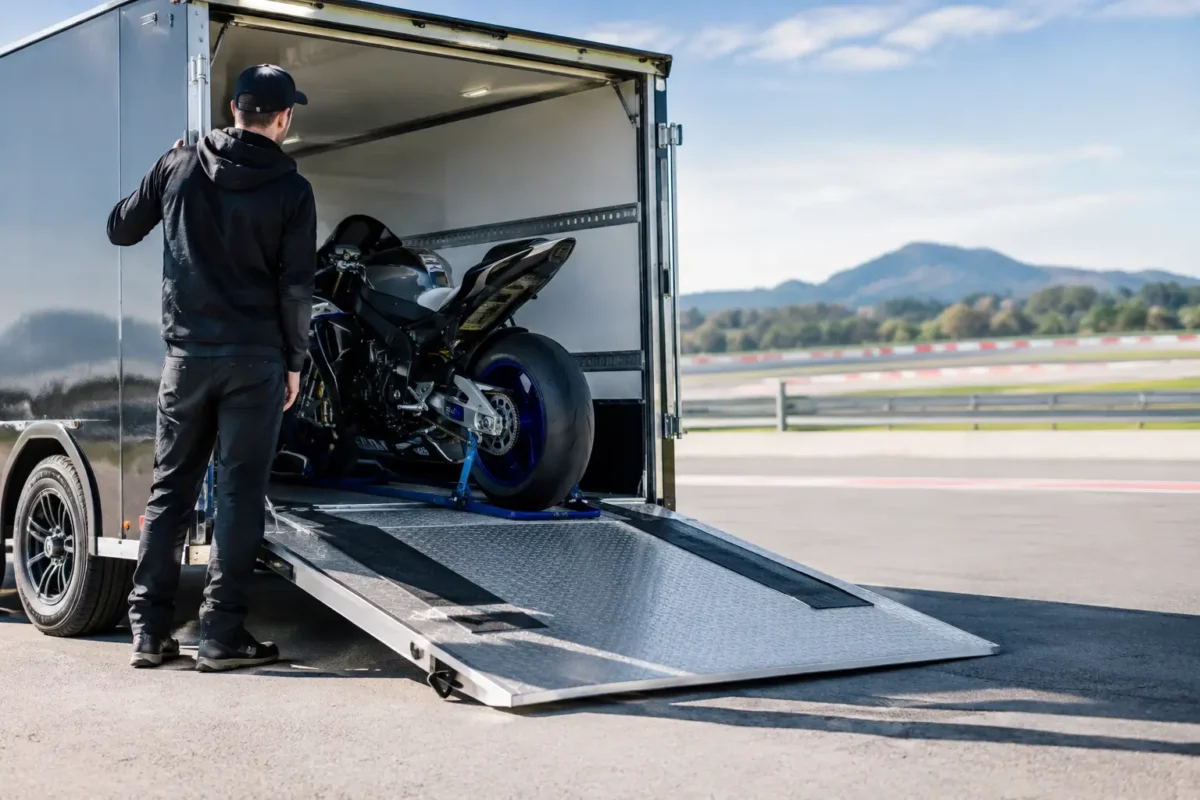
Specialist motorcycle transport uses purpose-built stillages and secure loading procedures designed around high-value machines. The bike is supported correctly, held securely and protected through every stage of the journey. That matters whether you ride a standard road bike with track fairings, a race-built superbike or something in between.
The same applies to the kit that makes a European event work. Tyre warmers, stands, tools, leathers, helmets, spares and luggage are all awkward to carry through airports or pack into a car. Sending them with the motorcycle means you arrive with the equipment you actually need, rather than compromising because it would not fit in your hand luggage.
There is no magic in transport. A bike still needs a proper pre-event inspection, fresh consumables where required and sensible preparation for the circuit. But professional handling reduces unnecessary risk on the journey and gives your machine a far better start to the week than thousands of road miles and improvised loading.
3. Border paperwork becomes manageable
Post-Brexit travel changed the practical side of taking a UK-registered bike into Europe. A track event is no longer simply a case of riding off the ferry and hoping every document is where it should be. Temporary export requirements, ownership evidence and ATA Carnet administration can all sit between you and the paddock.
When transport is organised by a specialist operation, the process is structured around exactly this type of trip. You still need to provide accurate information and meet deadlines, but you are not left trying to decode border requirements alone late at night before departure. The paperwork is handled as part of a planned logistics operation rather than an afterthought.
That clarity matters because border delays can affect everyone. One missing document or incorrectly declared item can put pressure on an entire schedule. Good preparation protects your own trip and respects the riders travelling alongside you.
Keep in mind that administration is not something to leave until the final week. Confirm what is required as soon as you book, make sure names and vehicle details match your documents, and respond quickly when information is requested. The strongest logistics support works best when the rider is equally organised.
4. You get more from every day away
European track events often run across multiple days at circuits that are worth the journey – the kind of places where elevation, commitment and flowing corners expose every weak point in your riding. Those days should be spent learning the circuit, listening to coaching feedback and putting in quality laps, not managing a return journey in the back of your mind.
Transport frees up the edges of the event. You can travel out after work, use a sensible flight, choose accommodation that suits your plans and stay focused on the circuit while the bike is already where it needs to be. At the end, you can leave without turning the final chequered flag into the start of another exhausting ride home.
That makes a difference to progression. More mental bandwidth means better decisions: whether to change pressure settings, when to rest, how to apply a coach’s feedback, and when to call time on a session rather than chasing one more lap while tired. Speed is built from those decisions as much as bravery.
For riders taking limited annual leave or fitting events around family and work, it also makes overseas track riding more realistic. You are buying back time that would otherwise disappear into motorway miles, hotel stops and recovery days.
5. The paddock experience starts before you arrive
There is a particular confidence in knowing the bike, kit and event logistics are moving to a clear plan. It allows the trip to feel like what it should be: a focused run at a major European circuit with riders who understand why they are there.
Transport creates a shared rhythm. Collection points, loading windows and event schedules bring the group together before the first session. By the time you reach the paddock, there is already a sense of purpose: riders comparing circuit notes, discussing tyres and getting ready for the first call to pit lane. It is not a tourist convoy. It is a group of people chasing the same improvement.
This is where a well-run organiser earns its place. Race Shift combines professional motorcycle and kit transport with event support, timing and coaching-led track days, so the operational detail supports the riding rather than distracting from it. The point is not simply to move a bike from A to B. It is to give you the best possible platform to ride faster and ride smarter.
Choosing transport that matches the event
Not all bike transport is equal, and the cheapest option is not automatically the best value. Ask how the motorcycles are secured, what kit can travel, which collection points are available, how paperwork is managed and what happens if plans change. Clear communication is as important as the lorry itself.
Also consider the schedule. Door-to-door collection can be ideal if time is tight, while a collection point may suit riders who want a straightforward handover and a defined departure plan. Neither is universally better. The right choice depends on where you live, how much kit you are taking and how tightly your week is organised.
The real test is simple: does the service remove friction, or does it create another layer of uncertainty? You should know where your bike is going, when it needs to be ready, what documents are required and what support is available at the event.
A European circuit should demand your full attention for the right reasons: the braking zone getting later, the corner exit getting cleaner, the lap time getting tighter. Let the road miles and logistics sit in the background. Save your energy for the circuit, then make every lap count.
