
Uncategorised
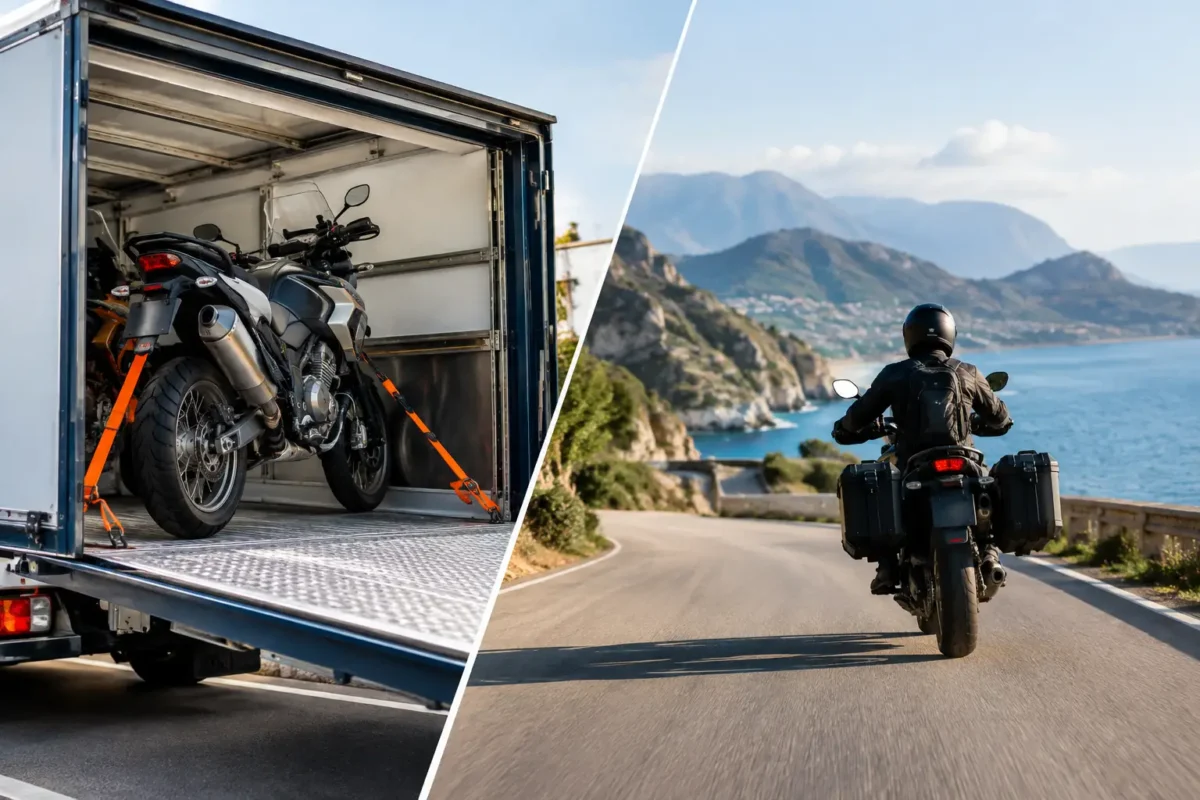
Motorcycle Transport Versus Riding Abroad
Oct
You have booked the circuit, studied the layout and started thinking about braking markers. Then comes the decision that can shape the whole trip: motorcycle transport versus riding abroad. Do you cross Europe under your own power, or let a professional transport operation take the bike while you arrive fresh, focused and ready for the first sighting laps?
For a European track day, this is not a simple question of convenience. It affects your energy, tyre choice, luggage, budget, contingency plan and, ultimately, the quality of your riding once the pit lane opens. Both options can make sense. The right call depends on whether the journey is part of your riding experience or simply the distance between you and the apex.
Motorcycle transport versus riding abroad: the real choice
Riding to a circuit in Spain, Portugal, Italy or beyond has a certain pull. The bike is yours, the route is yours, and the first few days can become a proper road trip before the serious work begins. For riders with time, confidence in long-distance touring and a desire to make the journey part of the holiday, it can be hugely rewarding.
But a multi-day track event asks different things of rider and machine. You are not travelling to admire the scenery at a relaxed pace. You are travelling to brake later, carry more corner speed and build consistency across long sessions. That makes the condition in which you arrive a performance factor, not an afterthought.
Professional transport separates the road miles from the track miles. Your motorcycle is collected, secured in purpose-built stillage, transported to the circuit and returned afterwards. You fly out with your riding kit or arrange the kit to travel with the bike, then step into the paddock with your concentration intact. For many committed track riders, that is the difference between attending an event and attacking it.
The road trip argument: freedom has a cost
There is no pretending that riding abroad is not an adventure. A ferry crossing, an Alpine pass, a night in a roadside hotel and a route built around the best tarmac can give the trip a character that flying never will. If you are heading to a nearby venue, travelling with friends and building in extra days, the road option can be exactly right.
It also gives you complete control over timing. There is no collection window and no flight schedule. If you want to leave at dawn, take the scenic route or stop for a detour, you can. And if your motorcycle is set up for road work as well as track use, the journey provides a useful shakedown before you arrive.
The pressure appears when the miles stack up. A return journey to southern Europe can mean several long days in the saddle, motorway monotony, weather exposure, fuel stops, tolls, ferry timings and the risk of delays before the event has even started. Add a track-focused riding position, rearsets, race seat and firm suspension, and the romantic image can become a very physical undertaking.
Then there is the machine. A set of tyres that feels fresh at home may be part-worn before the first track session. Chain adjustment, oil checks, punctures and unexpected mechanical problems become your responsibility at the side of an unfamiliar road. None of that is a reason not to ride abroad. It is a reason to be honest about the margin you are taking into a high-value track trip.
Road miles are not recovery miles
The biggest cost is often not the fuel bill. It is fatigue. Long motorway days ask little of your technique but plenty of your body and attention. You can arrive safely and still arrive flat, with a stiff neck, tired hands and less appetite for a hard first day on circuit.
At a world-class track, the opening sessions matter. They are where you re-learn reference points, check surface changes, build tyre temperature and establish your rhythm. Starting that process after several days of transit is possible, but it is rarely optimal. If you have paid for premium track time, coaching and timing, arriving fresh has real value.
What professional motorcycle transport changes
Transport is not just putting a bike in a lorry. For performance riders, it is about control. A proper operation uses secure, purpose-built motorcycle stillages, experienced loading teams and clear collection and delivery arrangements. The aim is simple: your bike reaches the paddock ready for inspection, tyre warmers and the next session, not after an endurance tour across Europe.
It also transforms what you can take. Track wheels, stands, tyre warmers, tools, leathers, spare visors and paddock equipment soon overwhelm the practical carrying capacity of a bike. You can post equipment ahead, strap it to the bike or rely on minimal kit, but none is as straightforward as travelling with a properly planned transport allocation.
That extra kit matters when conditions change. A spare rear wheel, a different compound or a second set of leathers can turn a frustrating day into a productive one. At circuits where weather, temperatures and abrasive surfaces can move quickly, being equipped gives you options.
Transport also reduces the administrative load around European travel. International motorcycle movement can involve paperwork, customs procedures and, in some cases, ATA Carnet administration. A specialist organiser that handles the process routinely knows where delays occur and what documents need to be in place. You still need to do your part accurately, but you are not learning the system while standing at a border with an event clock running.
Race Shift’s transport service is built around that rider-first logic: UK collection points, door-to-door options, secure stillages and event support that keeps the focus on the circuit rather than the logistics. It is a serious solution for riders who would rather spend their energy analysing data and working with a coach than calculating tolls.
Is transport always the cheaper option?
Not automatically. If you are travelling to a closer European circuit, staying for longer and sharing costs sensibly, riding can look attractive on paper. The calculation should include fuel, ferries or the Channel Tunnel, tolls, hotels en route, food, consumables and potential tyre wear – not just the initial transport quote.
Transport can cost more upfront, especially if you are travelling alone and booking late. But it can eliminate several road-trip expenses and make low-cost flights viable. More importantly, it protects the time you have actually bought at the circuit. A cheaper journey that leaves you too tired to use day one properly is not necessarily better value.
Think in terms of total event cost rather than travel cost. If the event includes several days at a premium circuit, new tyres, accommodation, flights and time away from work, the transport decision sits inside a much bigger investment. For many riders, protecting that investment is the sensible performance choice.
When riding abroad still wins
Ride your bike if the journey genuinely matters to you, you have enough time to absorb delays, your motorcycle is comfortable and reliable on distance, and you are happy to arrive with a lighter paddock setup. It is particularly compelling when you are combining the event with a proper touring holiday or visiting several locations.
Transport wins when the track event is the priority. It is the stronger option for short trips, distant circuits, race-replica ergonomics, riders carrying serious kit, anyone chasing a personal best, and anyone who wants to fly home without facing another thousand miles after a demanding final session.
There is also a middle ground. Some riders transport the bike out but ride it home through Europe afterwards. Others turn the return journey into a relaxed tour after the track work is complete. The key is deciding where you want the physical and logistical load to sit – before the event, after it, or nowhere near it.
Choose the option that protects your track time
The best European trips are not defined by the number of kilometres on the odometer. They are defined by clean sessions, stronger reference points, trusted paddock conversations and that moment when a corner finally opens beneath you exactly as it should.
If riding abroad adds to that experience, take the road and enjoy every mile. If it takes focus away from the reason you booked, put the bike on transport, arrive with a clear head and save your energy for the throttle. The circuit does not care how you got there. It only asks what you can do when the lights go green.
