
Uncategorised
Motorcycle Trailer Versus Professional Transport
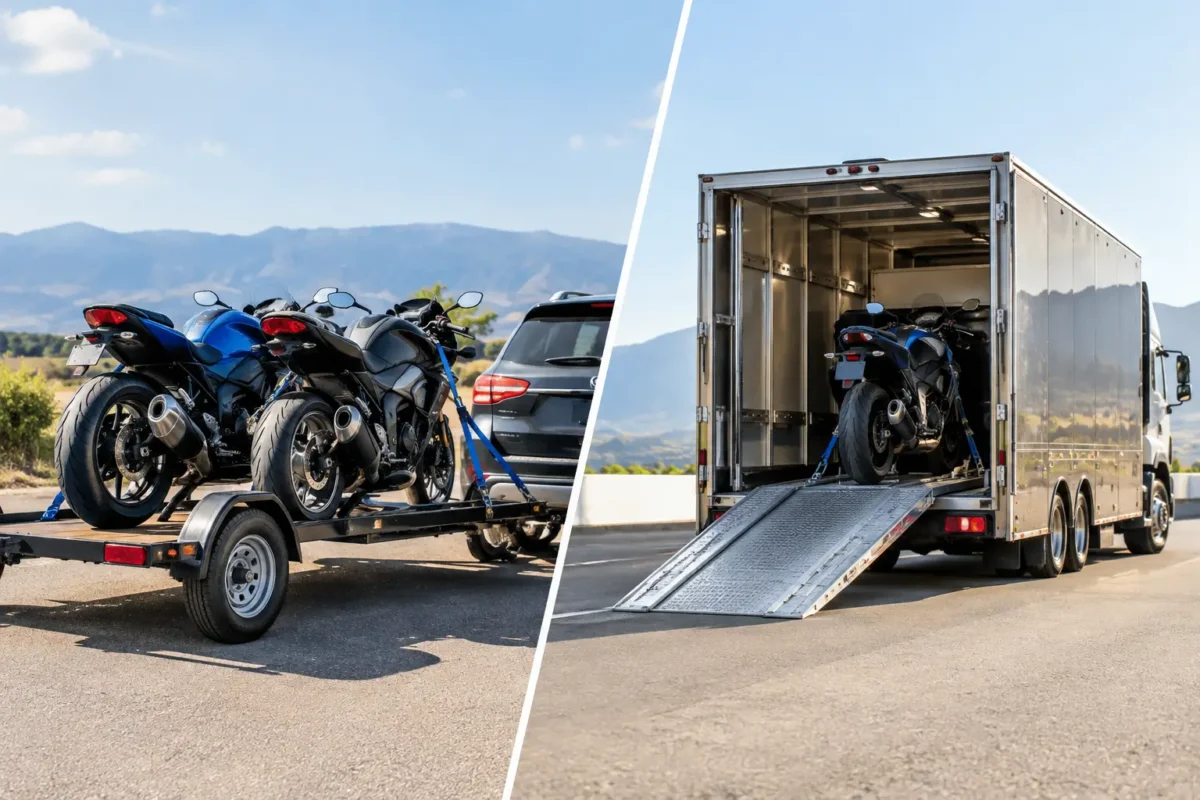
Oct
Your bike is loaded, the ferry is booked and the circuit is waiting. But before you chase the first apex at Aragón, Mugello or Portimão, there is one decision that shapes the entire trip: motorcycle trailer versus professional transport. It is not simply a question of how your machine reaches Europe. It is a choice between spending days managing a road trip and arriving ready to ride faster.
For some riders, towing their own bike is part of the mission. For others, it is friction standing between them and premium track time. Neither route is automatically right. The smart choice comes down to your vehicle, your kit, your appetite for long-distance logistics and what you want from the days either side of the event.
Motorcycle trailer versus professional transport: the real difference
A trailer puts you in full control. You decide when to leave, where to stop and how your bike is secured. It can be the right call for a self-contained rider travelling with friends, especially if the trailer, tow vehicle and European driving experience are already part of the garage setup.
Professional transport trades that control for focus. Your motorcycle and track kit are collected or delivered to an agreed point, secured in specialist stillages, moved across Europe and waiting at the circuit. You fly out, collect your riding gear and concentrate on the job that matters: learning the track, finding braking markers and carrying speed through the fast stuff.
The difference becomes clear on a multi-day event. A continental tow is not just the distance between home and a circuit gate. It is loading, checking straps, fuel stops, ferry or tunnel timing, motorway tolls, overnight security, border paperwork, finding parking and then doing it all again after a physically demanding event. Add rain, traffic or a mechanical issue with the towing vehicle, and the margin in your plan disappears quickly.
The case for taking your own trailer
There is a genuine appeal to opening the garage, loading the bike exactly as you like it and heading south. You can carry more than most transport allocations allow, from spare wheels and paddock stands to a full awning setup. If you are racing, travelling with a team or combining a track event with a longer European holiday, that flexibility can be valuable.
A trailer also makes sense when the costs are shared. Split ferry crossings, fuel and tolls across two or three riders, and the numbers can become competitive. The same is true if you already own a dependable tow car, a quality trailer and the equipment to secure a high-value motorcycle properly.
Control comes with responsibility
That freedom has a hard edge. A bike trailer needs correct loading, a roadworthy tow vehicle, properly rated straps, wheel chocks and regular checks throughout the journey. Weight distribution matters. A poorly loaded trailer can become unstable at motorway speed, particularly in crosswinds or when overtaking lorries.
You also need to be comfortable driving a longer, heavier combination through unfamiliar roads. European speed limits for towing, toll classifications, low-emission zones and parking restrictions can alter both your route and your budget. A late arrival at a ferry terminal is not an inconvenience when your entire event plan is sitting behind the car.
Then there is fatigue. After hundreds of miles towing, even the most committed rider is not arriving fresh. You may still have a track briefing, garage setup, tyre preparation and sign-on to complete before the first session. That is a lot of workload before the helmet even goes on.
What professional motorcycle transport changes
Professional transport is built for riders who want their energy on circuit, not on a French autoroute. The bike is loaded into purpose-designed transport equipment and secured for the journey alongside the kit required for the event. You travel separately, usually by air, and meet your machine at the venue.
For a rider flying into a European circuit, this can turn a complex expedition into a clean race weekend. No trailer storage at home. No long tow home when your body is tired and your concentration has already been used at 160 mph on track. No need to leave a car and trailer exposed for several days while you ride.
At Race Shift events, the transport proposition is designed around the reality of performance riding. Industry-leading stillages protect the bike in transit, while the logistics team handles the movement, collection options and key administration that can otherwise consume your time. For trips outside the UK, ATA Carnet administration is particularly useful. It removes one more potential hold-up from the plan.
Your kit arrives with purpose
The best transport service is not simply a lorry with bikes inside. It understands what a track rider needs at the circuit. That means a system for motorcycle security, clear collection and delivery instructions, realistic kit allowances and communication that tells you where things stand.
Ask exactly what can travel with the bike. Leathers, helmet, boots, tools, stands, tyre warmers and a small spares package are very different from loading every item in the workshop. Be clear about batteries, fuel containers, aerosols and other restricted items. Good logistics is precise, not vague.
Professional transport is also a strong option when you are travelling solo. The financial case for towing improves when several riders share costs; travelling alone changes that calculation. Once you add fuel, crossings, accommodation en route, tolls, trailer wear, extra insurance and food on the road, the apparent saving may be far smaller than it first looks.
Cost is more than the transport invoice
A trailer can look cheaper because the main figure is visible: fuel and a crossing. But calculate the full journey before deciding. Include towing fuel consumption, ferry or Eurotunnel fares for a car and trailer, motorway tolls, overnight hotels, trailer insurance, breakdown cover and parking. If you need to hire the trailer or upgrade the tow vehicle, include that too.
Professional transport has a clear upfront price, which can feel higher until you compare like with like. Your travel costs may be reduced to flights, airport transfers and perhaps one extra night near the circuit. More importantly, it gives you back time. For riders with limited annual leave, that time has a real value.
There is also the cost of a problem. A puncture on the trailer, a failed tow vehicle or a missed sailing can put an entire track event at risk. Professional operators are not immune to disruption, but their service is designed around contingencies, specialist equipment and established routes. That is a different risk profile from solving a roadside issue yourself in another country.
Risk, security and your pride and joy
No one wants to picture it, but a track bike is rarely a basic commuter. It may carry race bodywork, forged wheels, upgraded suspension and an engine built for hard use. How it is restrained and protected matters.
With your own trailer, the standard is entirely yours. Use proven tie-down points, protect painted surfaces, check tyre pressures and inspect straps at every stop. Avoid leaving the bike unattended in unsecured hotel car parks, and do not assume a basic padlock is a security plan.
With professional transport, ask how motorcycles are loaded, separated and secured. Ask about insurance arrangements, collection windows, documentation and what happens if schedules move. Direct answers are a positive sign. Track riders understand that details are where confidence is built.
Choose the route that protects your track time
Take your own trailer if you enjoy the road-trip element, have trusted equipment, are comfortable towing abroad and want maximum freedom over what you carry. It can be a brilliant shared adventure, particularly with a well-drilled group and enough time either side of the event.
Choose professional transport if your priority is arriving fresh, travelling light and giving every available hour to the circuit. It is especially compelling for solo riders, short multi-day breaks, first trips to European venues and anyone who would rather study data than chase a ferry check-in time.
There is no prize for making a track day harder than it needs to be. Pick the logistics that leave your mind clear, your body rested and your bike ready at the garage door. When pit lane opens, the only thing worth towing is your lap time down.
