
Uncategorised
Motorcycle Track Day Packing List for Fast Laps
Sep
The difference between a clean first session and a paddock-side scramble is usually decided before the lorry leaves. A serious motorcycle track day packing list is not about bringing the kitchen sink. It is about arriving at a world-class circuit with the equipment, paperwork and contingencies that let you focus on braking markers, body position and getting back on the throttle.
For a European multi-day event, the stakes are higher than a local day. You may be several countries from your garage, operating in heat, chasing lap time across consecutive days and relying on the kit you packed when a lever touches down or the weather turns. Pack with intent. Every item should either keep you safe, keep the bike moving, or help you recover well enough to ride faster tomorrow.
Start with the non-negotiables
Your riding kit is the first line of defence, not a place to compromise. Check every item before loading, rather than discovering a damaged visor, expired airbag service or worn boot slider at sign-on. A circuit can be unforgiving, and the faster the pace becomes, the less tolerance there is for tired equipment.
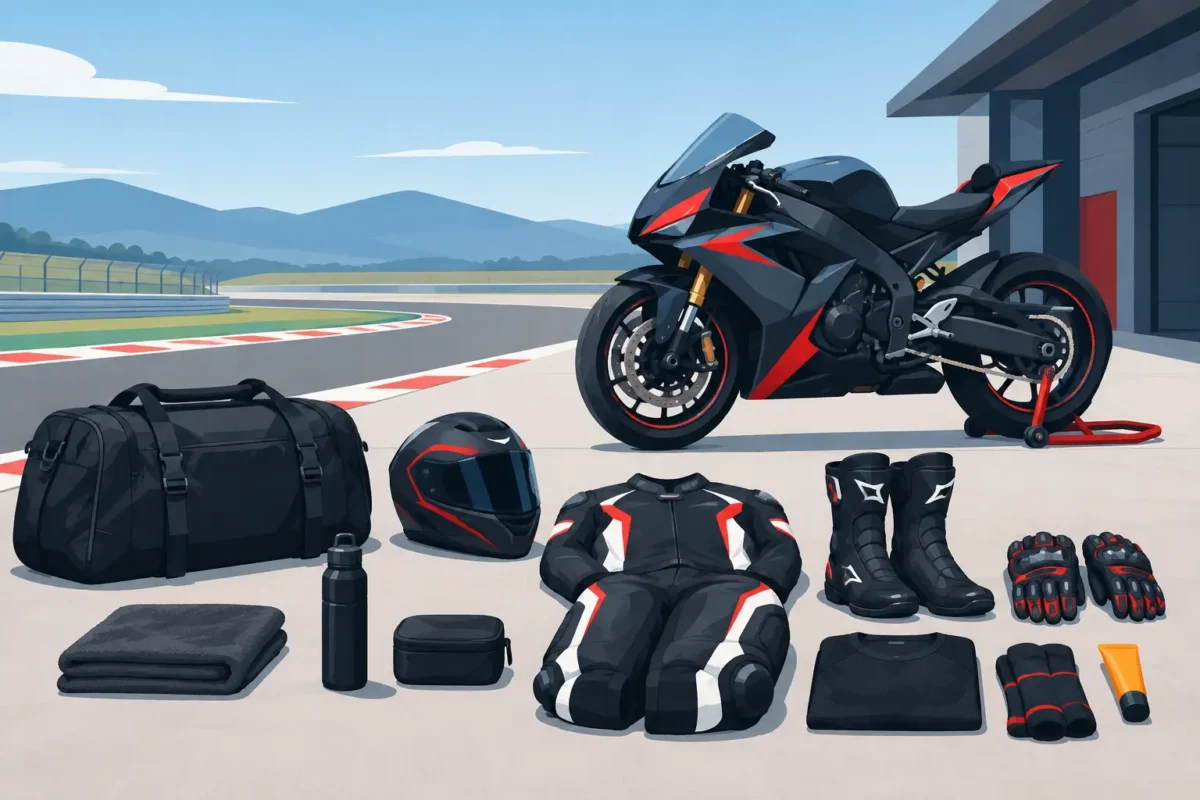
Take a current ACU Gold-approved helmet where required by the organiser, ideally with a clear visor plus a dark or light-sensitive option for changing conditions. A one-piece leather suit remains the right tool for committed circuit riding. Pair it with a back protector, boots and gloves in sound condition, plus an airbag system if you use one. Bring the charger, cartridge or gas canister specific to your system too. An airbag without power or a replacement canister is just expensive luggage.
Pack a spare set of gloves if you own them. Gloves get soaked, sweaty and battered quickly, especially across several days. A second base layer, spare socks and a cooling layer can make the afternoon session far more productive than riders expect. Comfort is performance when you are trying to stay sharp at the end of a long day.
Motorcycle track day packing list: bike essentials
The bike should be prepared well before collection or departure. Fresh oil, correctly tensioned chain, sound brake pads and a proper inspection are cheaper than losing half a day to a preventable problem. But preparation does not eliminate the need for spares. It simply gives you a stronger starting position.
Your core bike kit should include:
- Tyre warmers, a reliable pressure gauge and any generator, leads or paddock power adaptors you need.
- Front and rear paddock stands, plus a tie-down or two if your own setup requires them.
- A compact tool kit covering your axle, calipers, levers, fairings and common fasteners.
- Chain lube, brake cleaner, electrical tape, duct tape, cable ties and a small selection of fasteners.
- A spare brake lever, clutch lever, footpeg and bar end, along with the tools to fit them.
- A spare screen, if practical, and crash protection that suits your bike and class requirements.
Tyres deserve their own plan. Do not arrive with rubber that is technically legal but already past its best. Your target pressure will depend on tyre brand, compound, ambient temperature, circuit surface and whether you run warmers. Record cold and hot pressures, and listen to the tyre technician or experienced support team on site. Guesswork at 150 mph is a poor strategy.
If you are using transport, label everything clearly. Race Shift riders know the value of organised logistics, but a labelled tyre bag, stand and box still save time and confusion when multiple machines are being unloaded. Put small parts in a tough, lockable crate. Loose tools migrate across a paddock with remarkable speed.
Pack for the circuit, not just the journey
European circuits can deliver fierce sun, sudden rain, cold early mornings and long walks across exposed paddocks in the same trip. The obvious answer is layers, but the better answer is to separate riding kit from paddock kit so you do not leave one buried beneath the other.
A waterproof jacket, lightweight trainers, cap, sunglasses and sun cream are not glamorous, but they matter. Add refillable water bottles and electrolyte tablets. Dehydration blunts concentration, slows reactions and makes every braking zone feel less predictable. Drink before you feel thirsty, particularly in Spain, Portugal, Italy and Croatia during warmer months.
Take a folding chair if your transport arrangement and space allow it. Between sessions, sitting down in the shade with water and your notes is more useful than standing around burning energy. Earplugs are equally worthwhile, both on track and around a lively paddock. Protect your hearing now, because the noise does not get quieter with experience.
For wet-weather events, pack a waterproof oversuit that fits over leathers, a visor insert or anti-fog treatment, and a towel for your helmet and gloves. Rain is not automatically a lost day. It can be an outstanding place to develop smooth inputs, visual discipline and feel for grip – provided you have equipment that keeps distraction under control.
Documents and travel admin that cannot be replaced
A forgotten T-shirt can be bought. A missing passport, licence or vehicle document can stop the trip before it begins. Put all essential documents in one waterproof folder, then retain digital copies on your phone and in secure cloud storage.
You will normally need your passport, driving licence, event booking confirmation, travel insurance details and emergency contact information. Depending on your route and transport arrangement, you may also need motorcycle registration documents, insurance paperwork and ATA Carnet documentation. Check the event instructions early, not in the final week. Requirements vary by destination, and post-Brexit travel admin rewards riders who are organised.
Bring a European Health Insurance Card or its valid replacement where applicable, but do not mistake it for travel insurance. Confirm that your policy covers the type of circuit activity you are undertaking. Track riding is often excluded from standard policies, while specialist cover may have conditions around coaching, timing or competition. Read the wording. ‘Track day’ is not always interpreted the way riders use it.
Keep medication in its original packaging and pack enough for delays. If you wear glasses or contact lenses, take spares. A second pair of prescription glasses can rescue a trip that would otherwise become very complicated very quickly.
Make recovery part of your packing plan
Multi-day track riding rewards riders who treat recovery as seriously as setup. You do not need a physio suite in your hotel room, but you do need the basics: water, electrolytes, high-protein snacks, simple carbohydrates and something to loosen off after a hard day. Resistance bands, a lacrosse ball or a small massage tool take almost no room and earn their place after repeated hard braking and hanging off the bike.
Sleep gear matters too. Pack comfortable clothing for the evening and do not rely on riding base layers as holiday wear. If you are sharing accommodation, earplugs and an eye mask are small investments in arriving at breakfast ready to learn rather than merely survive.
A notebook is still one of the best performance tools in the paddock. Write down tyre pressures, suspension changes, gearing observations, coaching cues and the one corner that kept unravelling your lap. Phone notes work, but a waterproof notebook is harder to ignore when the signal is poor and the coffee queue is long.
What to leave behind
Do not pack every spare part you have ever owned. Heavy, low-probability items make transport and unpacking harder, while most circuit paddocks have a network of riders, technicians and suppliers who can help with common issues. Prioritise consumables and crash-vulnerable parts specific to your motorcycle.
Equally, leave ego at home. You can pack the fastest-looking kit in the paddock and still miss the lesson if you refuse feedback, chase a lap on cold tyres or ride beyond the conditions. The right packing list creates headspace for the work that counts: brake later only when you can do it calmly, hold the line, pick up the throttle earlier, repeat.
Pack early, use the same checklist every time, and load your essentials where you can reach them first. When the garage opens and the circuit goes live, you should not be hunting for a pressure gauge. You should be pulling on your helmet, rolling towards pit exit and meeting the apex properly.
