
Uncategorised
How to Prepare for a Motorcycle Track Day
Nov
The pit lane exposes poor preparation quickly. A loose lever, a tired rear tyre or a visor that fogs on lap three can steal the very track time you travelled for. Knowing how to prepare for motorcycle track day riding means arriving ready to learn, ready to push and calm enough to make good decisions when the lights go green.
For a proper European circuit event, preparation starts well before the loading day. Your bike, body, paperwork and plan all need to be working towards the same outcome: more clean laps, more confidence and no avoidable drama.
Start with the bike, not the excitement
A track bike does not need to be a race bike, but it does need to be mechanically honest. Circuit riding puts repeated heavy braking, sustained high revs and hard acceleration through every component. The question is not whether a worn part might survive. It is whether you want it occupying your mind at full lean through a fast corner.
Give the bike a proper inspection at least a week before departure. That leaves time to source parts, bed them in and test the result on the road if necessary. Check brake pads for both remaining material and even wear. Inspect discs for damage, make sure fluid is fresh and confirm the lever feels firm from cold to hot. If you cannot remember when the brake fluid was changed, change it.
Look closely at chain adjustment and lubrication, sprocket wear, wheel bearings, head bearings and suspension seals. Check every visible fastener around calipers, clip-ons, rearsets, bodywork and exhaust. A torque wrench is cheaper than losing a session to a vibrating heat shield or loose footpeg.
Fluids deserve the same discipline. Confirm oil level, coolant condition and any circuit-specific rules on coolant type before you travel. Most organisers will expect a sound machine with no leaks and a working throttle that snaps shut cleanly. Do not arrive hoping a minor issue will stay minor.
Tyres are part of the plan
Tyres are not a last-minute purchase. Choose a compound and construction that match the circuit, forecast, bike and your pace. A fast, abrasive track in southern Europe can punish a road-biased tyre, while a cold or wet morning may demand patience even with premium rubber fitted.
Start with enough tread and a tyre life plan. If your current rear is already squared off or approaching the wear indicators, replace it before the event. Take tyre pressure guidance from the manufacturer or tyre support at the circuit, then adjust based on hot readings and feel. Do not copy a stranger’s pressures because they ride the same brand. Their pace, tyre carcass, warmers and suspension settings may be completely different.
If you are carrying spare wheels, spare tyres or warmers, practise fitting and using everything before the event. Familiarity saves time when the paddock is busy and the next session is close.
Prepare for motorcycle track day riding with a session plan
Track days reward riders who leave their ego in the garage. The quickest route to real pace is not attacking the first lap. It is building information: sighting points, grip levels, surface changes, braking references and traffic patterns.
Set one or two objectives for each session. In the morning, that might be learning the circuit direction and identifying safe visual markers. Later, focus on releasing the brakes more smoothly or improving one corner exit. Trying to fix body position, braking, turn-in and throttle application all at once is how riders get overwhelmed.
Treat the first session as reconnaissance, even if you know the circuit from videos or previous visits. The track can change with temperature, resurfacing, damp patches and wind. Use the opening laps to bring tyres and brakes up to working temperature, assess your own focus and find clear space.
Timing is valuable, but only when you use it intelligently. A lap time tells you what happened, not why. Compare it with how the lap felt. Were you rushed into a corner? Did you miss an apex but carry more exit speed? Did traffic disguise a genuine improvement? Coaching, onboard footage and rider-to-rider feedback turn numbers into something useful.
If coaching is available, use it early. An experienced coach can spot the repeated habit you cannot feel from the saddle, whether that is turning in too early, holding tension in your arms or sacrificing the exit for a late-braking headline. At Race Shift events, professional coaching and pro-level timing are there to help riders make measurable progress, not simply circulate harder.
Pack kit that lets you focus on riding
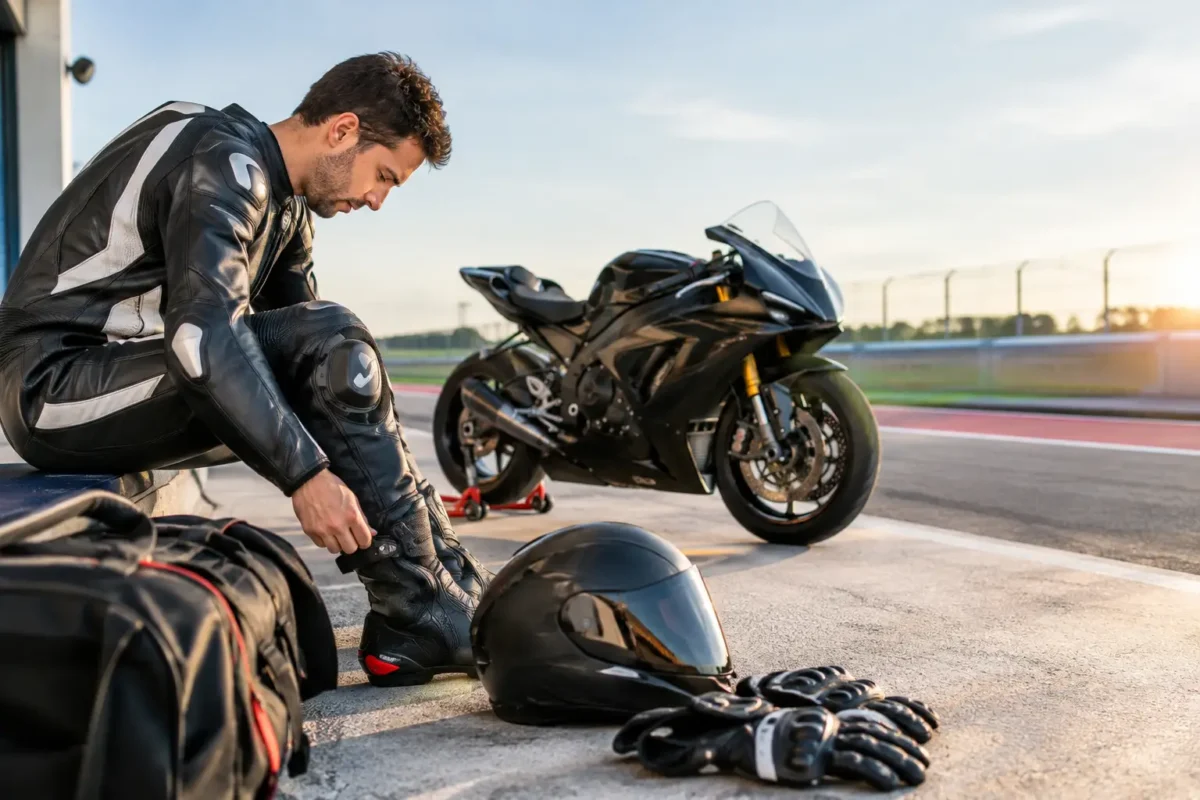
Your leathers, helmet, gloves and boots should be checked with the same care as the bike. A damaged visor mechanism, loose boot slider or worn glove palm becomes a distraction when you should be looking through the corner.
For multi-day events, take duplicates where failure would stop your riding. A second visor, spare gloves and a dry base layer can transform a wet or sweaty day. Pack earplugs, visor cleaner, tear-offs if you use them, a water bottle and food that is easy to eat between sessions. Dehydration makes riders vague, slow to react and more likely to over-ride.
A practical paddock kit should include the following:
- tyre pressure gauge and portable inflator
- basic tools, torque wrench, tape and cable ties
- chain lube, brake cleaner, rags and a small fuel can where permitted
- spare levers, fuses and any bike-specific parts that are difficult to source
- paddock stands, warmers and generator if your tyre set-up requires them
- waterproofs, sun protection and layers for changing conditions
Keep the essentials organised in one box rather than scattered through bags. After a long travel day, you want to set up efficiently, attend briefing and get some rest, not hunt for a 10 mm socket in the dark.
Make European travel part of the preparation
A circuit in Spain, Portugal, Italy or Croatia is not just a track day with better weather. It is a travel operation. Sort documents early and keep physical and digital copies where appropriate. Check your licence, passport validity, event confirmation, travel cover, vehicle documents and insurance arrangements. If your motorcycle is travelling separately, understand exactly what you need to provide for transport and border administration.
For UK riders, an ATA Carnet may be required for temporary export arrangements depending on the journey and set-up. Do not leave this to the week before collection. A professional organiser can remove much of the friction, but only if you return requested information accurately and on time.
Motorcycle transport is worth treating as performance support, not a luxury. A properly secured bike arriving at the circuit with your kit means you can fly out, save energy and avoid turning the journey into another endurance event. Confirm collection dates, what can travel with the bike, fuel requirements and how your machine should be prepared for the stillage. Photograph the bike before handover for your own records, then let the logistics do their job.
Build in margin
Book travel that gets you to the circuit area with time to spare. Delays happen. Airports lose bags. Hire cars take longer than expected. Arriving late, sleeping badly and rushing to sign on is a poor foundation for a high-speed first morning.
Aim to eat well, hydrate and get a proper night’s sleep before day one. Alcohol and track riding do not belong in the same plan. Neither does a heavy gym session, a huge late meal or a long night in the bar because everyone is excited to be away.
Read the paddock and ride the right group
Your group is not a status symbol. It is a safety and learning tool. Select the group where you can ride smoothly with room to observe, rather than one where you spend every lap defending your pride. If you are consistently catching traffic, speak to the organiser. If others are arriving at you far faster than expected, move down without drama.
At briefing, listen for overtaking rules, pit entry and exit procedures, flags, noise limits and the circuit’s particular hazards. Learn every flag before you travel, especially red, yellow, black, blue and oil flags. When a flag appears, respond immediately. There is no heroic interpretation of a red flag.
Respect other riders’ space. Make decisive, predictable passes only where the rules allow. If a lap is compromised, let it go. One abandoned lap is nothing. Forcing an overtake can cost far more than a lap time.
The final check before the first session
On the morning of day one, work through a simple routine. Check tyre pressures, fuel, chain condition and brake feel. Look beneath the bike for leaks. Confirm your helmet fastener, gloves, boots and back protector. Set your goal for the session, take a drink and give yourself enough time to reach the pit lane without rushing.
Then breathe. The circuit will still be there after the first two laps. Build heat, look far ahead and let the pace arrive through clean reference points and strong exits. The riders who improve most are rarely the ones making the biggest noise in pit lane. They are the ones who prepare properly, listen closely and keep returning to the apex with a clearer plan.
