
Uncategorised
Motorcycle Intercom Coaching on a Track Day
Nov
The braking marker arrives sooner than it did last session. You are carrying more speed, the bike is moving, and the usual post-session debrief will come 20 minutes too late. At a motorcycle intercom coaching track day, the right instruction can arrive before turn-in: release the brake, hold your line, look through the corner. That is the difference between collecting advice in the paddock and applying it at the point where it changes a lap.
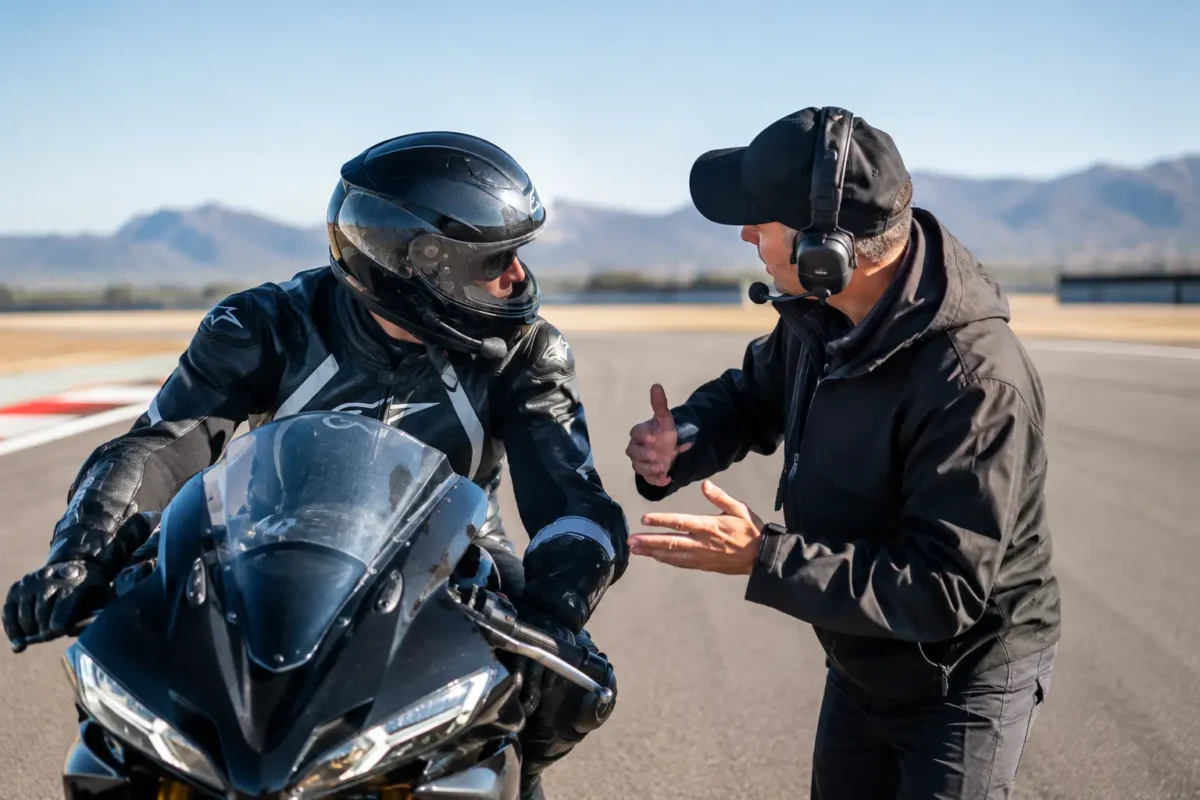
Intercom coaching is not a novelty bolted on to a normal track day. Used properly, it is one of the most direct ways to build pace, confidence and repeatable circuit habits. It gives a good coach the chance to work with what you are doing now, not what either of you can remember after a hot session.
Why live coaching changes the learning curve
A conventional follow-the-leader session still has real value. You can study lines, body position and reference points from a rider who knows the circuit. But the rider behind is also processing speed, braking force, track position, traffic and the unfamiliar rhythm of the lap. By the time the session ends, the detail that mattered most can be lost.
With a clear intercom connection, coaching becomes immediate. A coach can call out a missed apex, confirm that you released the brake at the right point, or stop you chasing another rider into a corner that is not yours. The feedback is short, specific and tied to the exact section of track where it matters.
That immediacy is particularly powerful at world-class European circuits. Fast, flowing venues reward commitment, but they punish vague references and late decisions. A rider may understand the ideal line after walking through it in the paddock, then discover that camber, elevation and speed change everything at full pace. Intercom guidance helps turn circuit knowledge into action before poor habits become the default.
It also removes one common ceiling for experienced track-day riders. At a certain point, generic advice such as be smoother or use more track is no longer enough. You need to know where you are losing time and why. Is the bike standing up because you are trailing the brake too deep? Are you sacrificing exit because you turned in early? Are you looking at the kerb rather than through the exit? Live feedback gives those questions a location and a solution.
What motorcycle intercom coaching should sound like
The best coaching is not a running commentary. Nobody needs a voice filling their helmet through every corner. At speed, too much information creates hesitation, and hesitation costs more time than almost any imperfect line.
Effective calls are brief and purposeful. A coach may use the out lap to establish markers, then focus on one corner or one behaviour for several laps. The message could be as simple as hold gear, wait, or pick it up. Once that change is stable, the next instruction can build on it.
This matters because faster riding is built in layers. A rider who is still releasing the brake abruptly does not need a lecture on maximum lean angle. A rider entering too early rarely needs more bravery. They need to wait, turn once and let the bike drive towards the exit. Intercom coaching creates the discipline to work on one gain at a time.
The conversation should also be two-way when conditions allow. If you cannot hear clearly, feel overwhelmed, or are unsure which corner an instruction relates to, say so after the session. Good coaching is a partnership, not an audition. Your coach should adapt the language and workload to your experience, the circuit and the objective for the day.
The first laps are for references, not lap records
On an unfamiliar circuit, use the early sessions to establish braking boards, turn-in references, apexes and exits. The temptation is to hunt a lap time immediately, especially when the circuit is wide, grippy and inviting. Resist it.
Intercom coaching can help you identify the few corners that govern the whole lap. Usually, they are not always the spectacular ones. A compromised exit on to a long straight can cost far more than a slightly cautious entry into a tight hairpin. When a coach tells you to give up a metre on entry for a cleaner drive, that is not restraint for its own sake. It is lap time waiting at the next apex.
How to get the most from intercom coaching
Arrive with a target, but make it a riding target rather than a fantasy lap time. Better brake release, calmer turn-in, stronger exits or a reliable line through a particular complex are useful goals. They give coach and rider a shared focus.
Before the first session, make sure your helmet, intercom unit and earpieces are fitted securely. Test volume with earplugs in place, not in a quiet garage without them. Wind noise, engine noise and a loose speaker can turn a useful instruction into static. Charge the unit, confirm the pairing process, and know the simple controls without taking a hand from the bars for longer than necessary.
Then agree the basics. Ask which coach you will follow, how close you should ride, what happens if traffic splits the group, and whether the coach will speak during the lap or review between sessions. A professional operation will have a clear method. That structure lets you concentrate on riding rather than trying to decode the format at 150 mph.
When the session ends, make notes before the next one. Keep them short: late turn-in at Turn 5, eyes up on exit, third gear through the chicane. You are building a personal circuit playbook. Timing data can then show whether the change worked, but do not let the stopwatch overrule what the bike told you. A slightly slower lap that is cleaner and repeatable is often the platform for a much faster one later in the day.
The trade-off: instruction versus headspace
Intercom coaching is powerful, but it is not always the right tool for every lap. A rider new to track riding may initially benefit from a sighting session and a simple follow before adding live calls. Equally, a quick rider working on fine detail may want one coached session, then several solo sessions to embed the lesson without external input.
Conditions matter too. In rain, on a busy track, or when fatigue starts creeping in, the right instruction may be to back the pace down and ride with margin. The objective is not to sound fearless over the intercom. It is to make decisions that keep you on track, learning and ready for the next session.
There is also a difference between being coached and being dependent. The goal is not to need a voice telling you where to brake forever. The goal is to develop the internal process: spot the reference, make the decision, execute the input, assess the result. Great coaching gives you that process, then gradually gives you room to own it.
Choose coaching that is built around your pace
A mixed group can still work well, but the coach must manage it properly. If you are riding far beyond your comfort zone to stay attached, you are not learning the line – you are surviving it. If you are held up every lap, you are not getting meaningful feedback either.
Look for coaching that respects pace groups, uses clear briefing standards and treats overtakes with discipline. The fastest riders on track are not necessarily the ones gaining most from tuition. The rider making deliberate, repeatable changes is usually the one who finds the biggest step forward over a multi-day event.
That is where a well-run European trip earns its place. Multiple days at the same circuit give you time to learn the layout, test the advice and come back after a night of rest with a sharper plan. At Race Shift events, rider-to-rider intercom coaching sits alongside pro-level timing and a serious support operation, so the focus stays where it belongs: braking later only when you can do it properly, hitting the apex, and driving harder out.
Make every coached lap count
Do not treat live instruction as permission to switch off your own judgement. Keep scanning, leave margin for traffic and changing grip, and process one call at a time. If the instruction arrives too late for a safe change, ignore it and reset for the next lap. A missed coaching point is never worth a rushed input.
The real value appears when the coach goes quiet and the lap still improves. You recognise the reference without being prompted. Your hands stay light, your eyes move early, and the bike arrives at the exit pointed where it needs to be. That is not borrowed pace. It is yours.
Take the radio call, do the work, then let the circuit prove it. The apex does not care how much advice you received. It rewards the rider who can turn clear feedback into clean, committed action.
