
Uncategorised
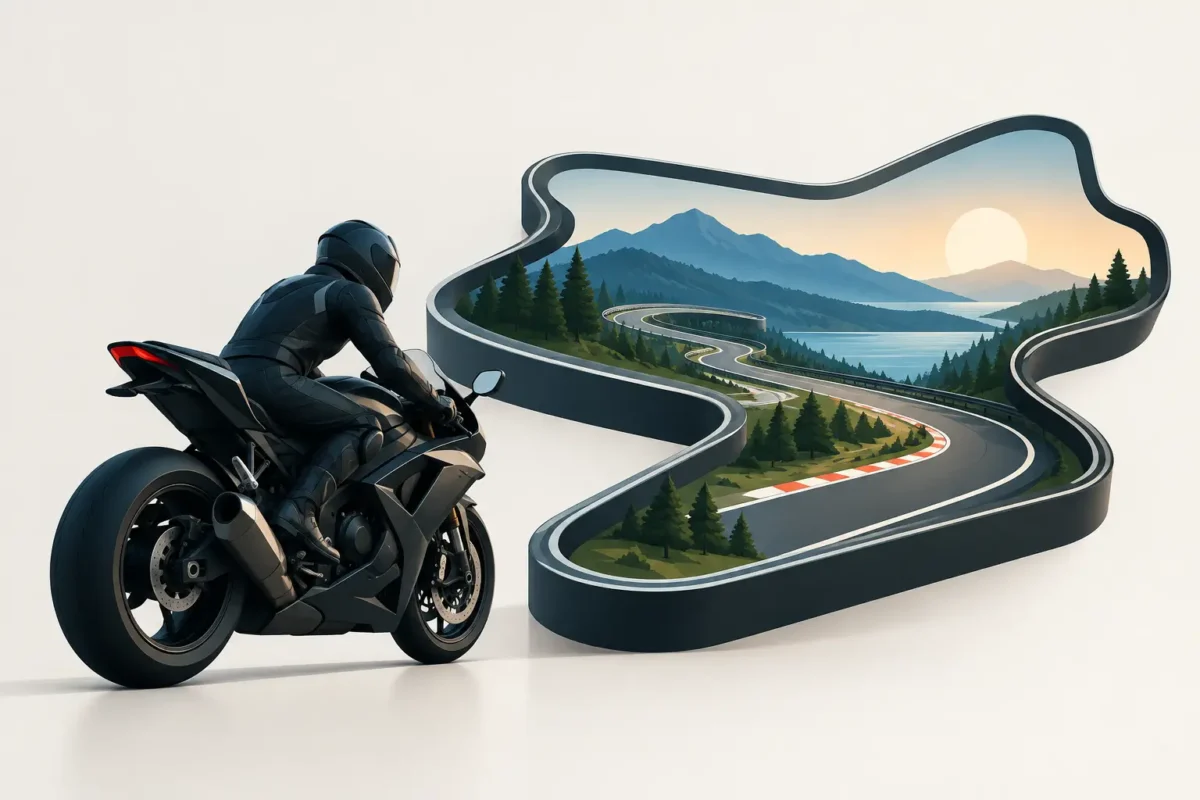
3D Motorcycle Track Art for Riders Who Live It
Sep
The lap ends. The bike is back in the garage. Your leathers still carry the evidence of a proper few days on circuit. 3D motorcycle track art gives that experience a permanent place beyond a phone gallery full of blurry kerb shots and timing screenshots. It is not generic motorsport décor. Done properly, it is the exact ribbon of tarmac where you found a later brake marker, hit the apex cleanly, or finally committed to the throttle.
For riders who travel for world-class tracks, the circuit matters. You remember the compression, the blind entry, the run-off, the grip change and the corner that exposed every bad habit. A precision-made model of that layout has weight because it represents riding, not merely watching.
Why 3D motorcycle track art belongs in a rider’s space
A circuit map is useful. A 3D rendering is different. It gives the layout depth, shape and presence, allowing the rhythm of the track to make sense at a glance. Hang it in the garage, workshop, office or hall and it becomes a conversation that starts with the right question: what happened there?
That matters most with tracks that are hard-earned. A European circuit trip asks more of a rider than booking a local day. There is preparation, travel, tyres, kit, transport, weather checks and the focus required to string together session after session. The finished piece becomes a marker of the commitment behind the experience.
It can also sharpen the memory of a circuit long after the event. Look at a layout and the details return quickly: the confidence needed to turn in, the patience before picking up the throttle, the place where a coach told you to stop fighting the bike. That is why the best track art feels personal even when two riders own the same circuit.
The circuit should mean something
The strongest choice is rarely the track with the most famous name. It is the one that has earned a place in your riding story.
Perhaps it is your first overseas event, the venue where you dropped seconds after working with a coach, or the circuit where your group stayed out late replaying a final-session battle over dinner. Maybe it is simply the layout that makes you grin before you have even crossed pit exit. That connection will outlast whatever is currently fashionable.
For some riders, the decision is simple: choose the circuit that changed their pace. For others, it is about ambition. A piece representing the track you are booked to ride can be a serious reminder of the job ahead. Learn the sequence, respect the difficult sections and arrive ready to ride smarter.
There is a trade-off. An iconic circuit is instantly recognisable to almost anyone in the paddock. A less obvious layout may mean more to you but need a closer look from visitors. Neither is wrong. Personal history wins in a private garage; broad recognition can make sense in a shared space, business reception or simulator room.
Read the layout like a rider
Before choosing, look beyond the silhouette. Does the model preserve the sections that define the lap? Long straights, tight hairpins, flowing direction changes and elevation-heavy sections each give a circuit its identity. The best 3D motorcycle track art makes those characteristics visible rather than flattening everything into a decorative outline.
A technical circuit with repeated transitions often looks excellent as a detailed piece because the intricacy rewards a closer view. A high-speed layout can be more striking at a larger scale, where its long arcs and heavy braking zones have room to breathe. Scale should serve the shape, not just fill an empty patch of wall.
Scale, finish and placement make the difference
Track art earns its place when the finish suits the room and the way you use it. In a clean, contemporary office, a restrained monochrome finish can look sharp and purposeful. In a workshop surrounded by wheels, warmers and race numbers, a darker industrial treatment may sit more naturally. The goal is not to make the room look like a gift shop. It is to put a real part of your riding life on display.
Think about sightlines before choosing a size. A small piece can work well above a desk or alongside framed event photographs. A larger format has more authority over a workbench, sofa or garage wall, especially if the circuit is complex. Give it enough clear space that the layout reads immediately.
Lighting changes the result more than most people expect. Side lighting brings out the relief and makes the circuit structure stand proud; flat overhead light can reduce that sense of depth. If the piece is going near a window, consider glare and direct sun. A display should still look right when you walk into the room after a late ride home, not only in a perfectly staged photograph.
Colour is a question of restraint. Strong circuit colours can create impact, particularly when they echo a bike or race livery. But a finish that is too busy can compete with the track itself. Let the lines, curves and elevation do the talking. A single considered accent often delivers more than a full grid of competing colours.
What separates a proper piece from novelty décor
Not all track art is made with the same intent. A proper piece should feel engineered, clean and considered. Edges should be crisp, proportions should look right and the finish should hold up to the close inspection it will get from riders who know their circuits.
Accuracy matters, but so does interpretation. A perfectly literal representation may not always make the most compelling wall piece if every surface detail muddies the shape. Equally, an overly simplified outline can lose the character that made you choose the track. The right balance captures the circuit’s identifiable rhythm while still reading clearly from across the room.
Material and construction influence the feel as well. Lightweight pieces are easier to position and can suit a domestic setting. Heavier, more substantial formats often suit a garage or dedicated riding room, where the display can carry a more mechanical edge. Check the intended mounting surface, particularly in garages with blockwork walls or lined plasterboard. It is a small practical detail, but there is nothing premium about a favourite circuit sitting crooked after a fortnight.
If you are buying it as a gift, avoid guessing purely from the recipient’s social media. Ask which circuit they talk about when nobody has prompted them. The answer may not be the obvious one, and that is exactly why it will land.
Build a wall that tells the right story
One circuit can stand alone. A collection can become better with purpose. Three pieces arranged around a theme – first overseas track day, fastest lap venue and bucket-list circuit – will feel more deliberate than an assortment chosen only because the shapes look good together.
Keep the supporting details tight. A framed event photograph, a race number panel, a clean timing printout or a set of worn knee sliders can work beside track art because each item has ridden the same story. Too many accessories dilute the impact. The circuit should remain the focal point.
For riders building towards a season of European track time, the wall can evolve as the riding does. Add a piece after the event that tested you, taught you or gave you your best day on a bike. At Race Shift, the point has always been more than getting through the gate at a circuit. It is about the preparation, coaching, track time and shared paddock effort that make each venue worth remembering.
The best 3D motorcycle track art is not bought to prove that you know a famous layout. It is chosen because the circuit still runs through your head when the bike is silent. Pick the one that makes you want to pull on your leathers, chase the apex and go again.
