
Uncategorised
What to Pack for a European Track Day Trip
Nov
The wrong packing decision can cost more than comfort. It can cost a session at a circuit you have travelled hundreds of miles to ride. When deciding what to pack for a European track day, think beyond the usual leathers-and-lid routine. You are building a trackside operation: one that keeps you safe, focused and ready when the pit-lane light goes green.
European circuits can deliver savage heat, sudden rain, abrasive surfaces and several days of relentless running. The goal is not to pack everything you own. It is to bring the kit that protects your momentum, lets you adapt quickly and keeps the motorcycle at the apex rather than parked under an awning.
Pack for track time, not for the airport
Start with the basic principle: your luggage travels with you, while your motorcycle and heavier equipment may travel separately. That division shapes every decision. Put anything you cannot afford to lose, anything required at sign-on, and anything you need on arrival in your personal luggage.
Your bike transport kit should be clearly labelled, securely packed and limited to items you will genuinely use. A multi-day event creates the temptation to load up every spare part in the garage. Be realistic. Bring the items that commonly wear, break or make a meaningful difference to your riding. Leave the fantasy workshop at home.
If you are using managed motorcycle transport, confirm the permitted kit allowance, the collection deadline and exactly what can remain with the bike. Race Shift transport is designed to remove a lot of the logistical friction, but clear labelling and a sensible kit bag still make loading, unloading and paddock life quicker for everyone.
What to pack for a European track day: rider kit
Your riding kit is non-negotiable. Check it before it is packed, not in the hotel car park. A visor with a deep scratch, a zip that is starting to fail or a back protector left on the hallway bench is a needless own goal.
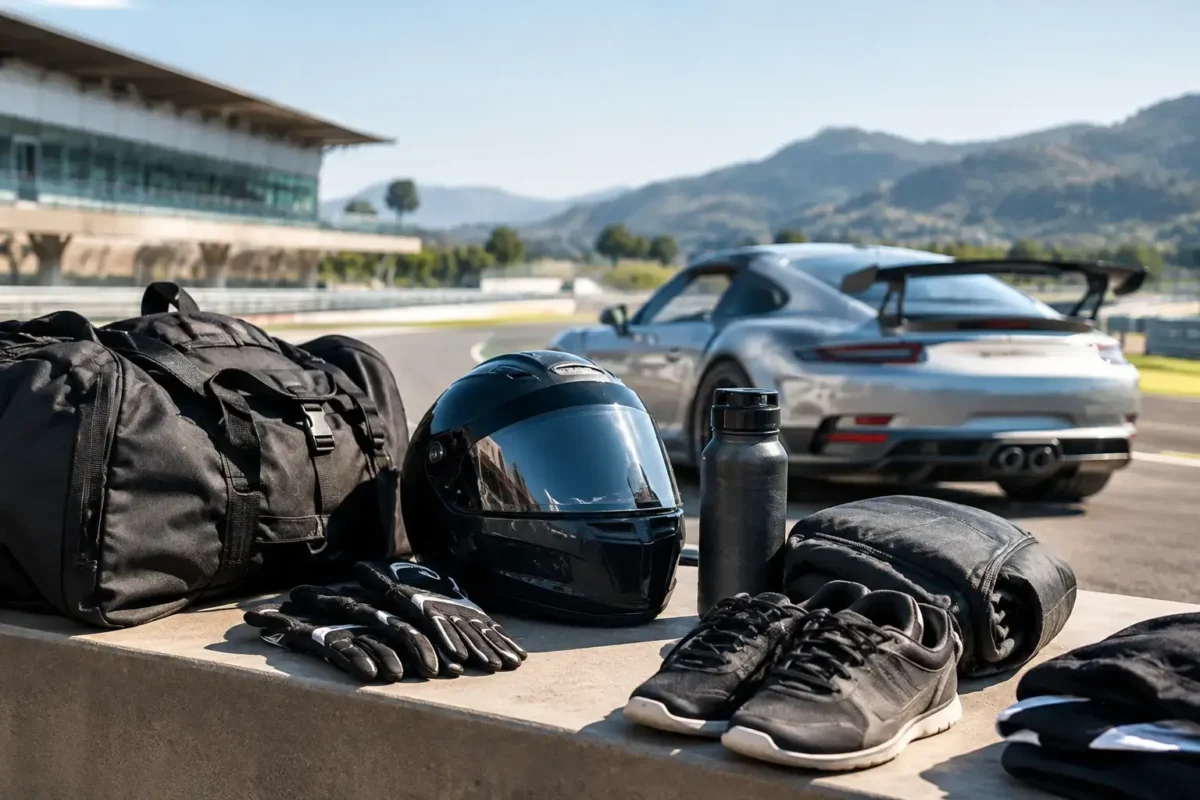
For a proper European track day, take:
- Your one-piece leather suit, plus a backup if you have one. Heat, sweat and repeated days on track can expose weak stitching, tired zips and worn sliders.
- A current, undamaged full-face helmet with a clear visor. A dark or tinted visor is useful for bright southern circuits, but never rely on it alone.
- Back and chest protection, gloves, boots and spare knee sliders. Sliders disappear surprisingly quickly when you are committing to the edge of the tyre.
- Base layers, spare socks and enough underwear for the full trip. This sounds ordinary until you are trying to pull on damp leathers before the first session.
- Earplugs, a hydration pack or bottle, sun cream and a lightweight waterproof layer for the paddock.
A spare visor deserves particular attention. Spain, Portugal and Italy can serve up hard glare; a wet session in Belgium, the Netherlands or Germany can turn a smoked visor into a liability. Take a clear visor, cleaning spray and a microfibre cloth. Vision is lap time, but it is also your margin for error.
Do not overlook recovery. Trainers, comfortable clothing and something warm for the evening take little space and make consecutive days more manageable. Fast riders know when to push. Smart riders also know that sleep, hydration and a proper meal matter more than one more paddock beer.
The bike kit that earns its space
A motorcycle prepared for UK track days may be close to ready, but a multi-day European event asks more of it. Heat cycles, high ambient temperatures and unfamiliar track surfaces accelerate tyre wear and reveal weak points. Give the bike a proper inspection before collection: brakes, chain, sprockets, fluids, fasteners, battery and tyres all deserve attention.
Your core bike kit should cover routine adjustment, minor damage and consumables:
- Tyre pressure gauge, paddock stands if your transport arrangement allows, tyre warmers and the correct power leads or adapters.
- A compact tool kit with the exact sockets, Allen keys and Torx bits your bike uses, plus torque wrench settings written down for critical fasteners.
- Chain lube, brake cleaner, rags, cable ties, duct tape and nitrile gloves.
- Spare brake pads, a clutch and brake lever, footpeg hardware, spare bolts and a lever guard if fitted.
- A spare set of tyres or a clear plan for tyre support at the circuit, especially if you are chasing consistent pace over several days.
- Engine oil suitable for your machine, coolant if required, and a small funnel.
The trade-off is weight and complexity. If your motorcycle is transported in a professional stillage, pack cleanly and avoid loose bottles or unprotected tools that can move in transit. Use a tough box or kit bag, seal fluids inside secondary bags and label everything with your name, number and event details.
Tyres deserve more thought than any other consumable. Do not arrive with a rear that has one hard day left in it and hope it survives two more in 30-degree heat. The right compound, pressure and warm-up process depend on the circuit, weather, pace and machine. Ask experienced tyre support for guidance, then use your own timing and feedback rather than copying another rider’s numbers.
Paddock equipment that makes life easier
Paddock comfort is not luxury. It keeps your attention on braking markers instead of dehydration, sunburn or a missing 10 mm socket. A folding chair, small canopy or awning where permitted, cooler bag, reusable water bottle and basic food can transform the day.
Take a battery pack for your mobile phone and action camera, charging cables, spare camera batteries and a notebook. The notebook matters. Record tyre pressures, suspension changes, lap times, gearing observations and coaching points while they are fresh. A fast lap is useful. Understanding why it happened is how you ride faster tomorrow.
A small first-aid kit, pain relief you know you can take, blister plasters and any regular medication should travel in your hand luggage. Add a few towels too. They deal with sweat, rain, spilled fuel and the occasional post-session clean-up better than optimism ever will.
Documents and travel essentials
This is where a brilliant trip can become administratively messy. Keep your passport, driving licence, event booking confirmation, travel insurance details, medical information and payment cards together in a waterproof document wallet. Carry digital copies as a backup, but do not assume a flat mobile phone battery or weak paddock signal will be helpful when you need a document.
Check the requirements for your exact journey well before departure. That includes passport validity, vehicle ownership paperwork, insurance cover, track-day exclusions, breakdown arrangements and any temporary export documentation required for a motorcycle travelling from the UK. An ATA Carnet may be part of the process depending on how the bike and equipment are transported. Follow the organiser’s instructions precisely and answer requests for paperwork early, not the night before collection.
Take your European Health Insurance Card or Global Health Insurance Card if valid for you, but treat it as support rather than a replacement for suitable travel and medical cover. Track riding is often excluded from standard policies, so read the wording. ‘Motorcycling covered’ does not automatically mean circuit riding covered.
Load with a plan, then leave room to learn
Before the trip, lay every item out and split it into three groups: hand luggage, bike transport kit and leave-at-home kit. Photograph the packed bike kit and make a short checklist. That gives you a fast reference at collection, and it stops the classic panic of wondering whether your tyre warmers are in the garage or already on the lorry.
Once you arrive, do not turn the first evening into a frantic rebuild. Set up your paddock area, check the bike after transport, hydrate and get to the briefing on time. Then let the circuit teach you. The best thing you can pack for a European track day is enough preparation that, when the session starts, your only job is to look through the corner, find the apex and drive on.
