
Uncategorised
Motorcycle Track Day Coaching That Makes You Faster
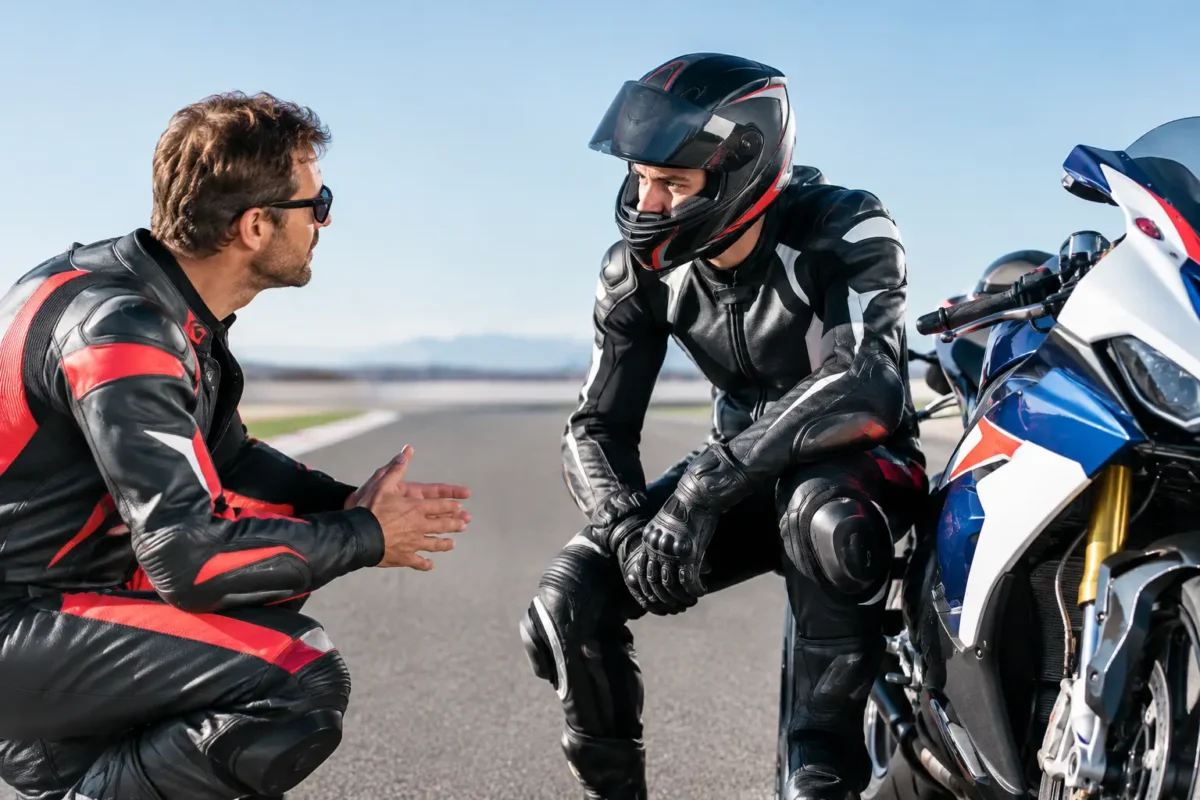
Nov
The gap between circulating and genuinely riding a circuit is rarely bravery. It is usually information. Motorcycle track day coaching gives you that information at the moment it matters: where the bike is losing time, why the corner is not working and what to change on the next lap.
At a world-class circuit, every mistake is amplified. Turn in a metre early and you compromise the exit. Pick up the throttle before the bike is settled and you run wide. Brake hard but release poorly and the front never loads cleanly. Coaching turns those vague feelings into repeatable actions. That is how committed riders make proper progress without turning every session into a gamble.
What motorcycle track day coaching should deliver
Good coaching is not a tow around the circuit followed by a vague compliment in the paddock. It is a structured process built around observation, clear instruction, execution and review. The coach should identify the one or two changes that will deliver the biggest gain, then give you enough track time to feel them.
That might mean changing your reference point for braking at Portimão, delaying your turn-in at MotorLand Aragón, or accepting a slower entry so you can fire the bike out of a long-radius corner. The fastest line is not always the line that feels most dramatic. Often it is calmer, later and far more effective on the throttle.
The best sessions create a measurable link between technique and lap time. Professional timing helps, but it is not there to feed ego. Used properly, it shows whether a change is repeatable across several laps and whether it still works when tyres, fuel load and fatigue begin to alter the bike’s behaviour.
Choose coaching that matches your riding
Not every rider needs the same intervention. A fast road rider on their first European track event may need help with visual discipline, lines and the confidence to use the whole circuit. A track-day regular might be braking well but giving away metres at corner exit. An amateur racer may need a harder look at racecraft, starts, tyre management and finding time when the grip falls away.
Be honest about the problem you want solved. If you say you want to ride faster, a good coach will ask what happens before the lap time stalls. Are you running wide? Struggling to pass? Losing the rear on exit? Getting tired after four hard laps? Specific answers lead to specific gains.
Coach-to-rider ratio matters too. Group briefings have value, especially when learning circuit etiquette or discussing conditions, but they cannot replace individual feedback. You need a coach who has watched your riding closely enough to understand your habits, not just your pace.
Look for credible circuit experience and a coaching method you can act on. Elite riders bring exceptional speed, but speed alone is not the job. The real skill is translating what they see into an instruction that works for your machine, your confidence and your current level. A coach who gives you ten things to remember has probably given you none.
Why intercom coaching changes the session
Rider-to-rider intercom coaching can shorten the learning curve dramatically. Instead of trying to recall a debrief while rolling out of pit lane, you receive a timely cue as the track unfolds: hold the brakes longer, look past the kerb, wait for the apex, stand the bike up earlier.
That immediacy is powerful, particularly on unfamiliar circuits. Major European venues can be wide, fast and visually intimidating. Blind crests, descending entries and long combinations ask a lot of your reference points. A calm voice can keep you focused on the next decision rather than chasing the rider ahead or guessing where the circuit goes.
There is a trade-off. Intercom instruction must be concise, and it works best once the fundamentals are already clear. If you are overloaded, too much communication becomes noise. The right coach knows when to talk, when to lead and when to leave you alone to put the lap together.
Arrive ready to learn, not just ready to ride
Coaching starts before the first sighting laps. Set a clear aim for the day, but keep it technical rather than emotional. “I want to be two seconds quicker” is a result. “I want to release the brake more smoothly into the slow corners” is something you can practise.
Make sure the basics are handled before your session is called. Tyres need appropriate pressure and condition, controls should be set where you can use them without tension, and your fuel level should not become a distraction. If your machine feels wrong, tell the coach. A poor lever position or an overworked rear tyre can look like a riding issue until someone asks the right question.
Study the circuit map, but do not mistake that for learning the track. Maps show direction, not elevation, camber, surface changes or the way a corner opens on exit. Use early sessions to build reference points: a board, a marshal’s post, a patch in the tarmac, the start of a kerb. Reliable references free your eyes to look further ahead.
Hydration and rest belong in the performance plan as well. Multi-day European events are where riders often make their biggest breakthroughs, but they also expose poor routines. Ride hard for three days while under-drinking, skipping food and staying up late, and your decision-making will go backwards. The lap does not care how keen you are.
Use the debrief properly
The debrief is where a coached session becomes a better next session. Do not respond with “it felt good” and move on. Describe what you felt at the exact point the coach is discussing. Did the front go light over the crest? Did you miss the downshift? Did you see the exit late? That conversation helps separate a line problem from a braking problem or a confidence problem.
Then take one priority back onto the circuit. You may have three corners to improve, but chase one pattern first. For example, work on finishing your braking before turn-in at every slow corner, rather than trying to perfect every apex at once. Once the movement becomes automatic, add the next layer.
Video can help if it is used with purpose. Watch a short section alongside a coach’s explanation, then identify what your eyes, hands and body are doing. Do not spend the evening analysing every frame when sleep would make you faster tomorrow.
Faster is only useful when it is repeatable
A single hero lap proves very little. Real progress is being able to run a clean pace without drama, preserve the tyres and still have attention left for flags, traffic and changing grip. That is the standard worth chasing.
This is also why coaching is not only for newer riders. As pace rises, the gains become smaller and the consequences of poor technique become sharper. A rider who is already quick may need help with tiny changes to brake release, body position or exit geometry that make the bike easier to manage at speed. Those changes can be worth more than another expensive modification.
At Race Shift events, the strongest coaching environment combines experienced instruction with pro-level timing, serious track time and the operational support to let riders focus on the job. When your bike transport, kit and event logistics are handled properly, you arrive with more energy for the circuit and more capacity to learn.
Turn every session into evidence
Keep a simple record across the event. Note tyre pressures, conditions, gearing changes, lap-time range and the one coaching focus from each outing. The point is not to build a spreadsheet for its own sake. It is to stop guessing when you return to the same circuit or face a similar corner elsewhere.
If a change made you slower initially but more consistent by the end of the day, that is often progress. Better lines can feel slower because they remove the drama you have mistaken for speed. Give a technical change enough laps before rejecting it, then compare the evidence.
The right motorcycle track day coaching will not turn every lap into a qualifying lap. It will give you something more valuable: the awareness to ride closer to your limit with control, understand where the next gain lives and return to the paddock knowing exactly what you learned. Take that mindset to every session, and the apex starts coming to you.
