
Uncategorised
Motorcycle Track Day Intercom Coaching That Works
Sep
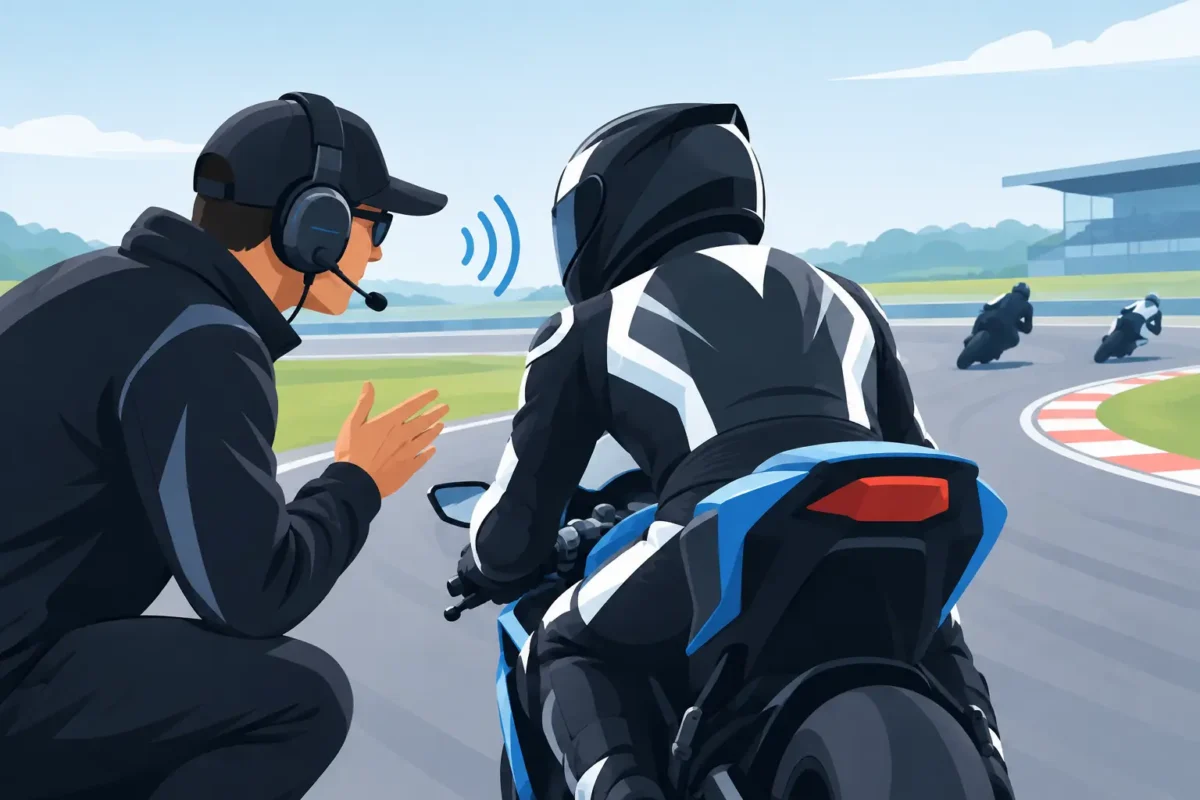
The difference between circulating quickly and genuinely moving forward often happens in the half-second after you turn in. Your eyes arrive late, the brake comes off too abruptly, the bike runs a metre wide at the apex. By the time you return to the paddock, that moment has blurred into a dozen others. Motorcycle track day intercom coaching changes that. The feedback arrives while the corner is still happening, when you can act on it rather than trying to reconstruct it from memory.
For riders serious about pace, this is not a novelty headset and a few vague words of encouragement. It is direct, live instruction from a coach who can see your lines, your body position, your braking markers and the decisions that either carry speed or throw it away. Used properly, it turns a session into purposeful work.
Why motorcycle track day intercom coaching moves the needle
Video and lap timing are valuable, but both are retrospective. They tell you what happened. Intercom coaching can influence what happens next, often within the next corner sequence.
A capable coach can call a reference point before you reach it: hold the brake deeper, wait for the turn, look through the corner, pick the bike up earlier. At pace, small instructions matter because small habits create big lap-time losses. Releasing the brake too early can leave the front unloaded. Turning in too soon can force a tight apex and a compromised exit. Chasing another rider’s line can make you fast in one corner and slow for the next five.
The real value is specificity. “Good job” is nice to hear. “You are arriving at the apex early at Turn 7, stay wider on entry and let it come back to you” gives you something to test immediately. Repeat that message over several laps, then confirm the improvement, and the rider begins to understand not just the instruction but the feeling behind it.
That is how confidence is built at a world-class track. Not through sending it harder, but through knowing why the bike is working beneath you.
What a proper coached intercom session looks like
The best sessions start before the pit lane opens. Coach and rider need a clear plan: which part of the circuit matters most, what the rider wants to improve, and which instruction will take priority if the pace rises. A fast rider may be working on trail braking and entry stability. A newer track rider might be focused on vision, relaxed arms and using all of the circuit without drifting across it.
Communication must be brief. Nobody needs a running commentary at full lean. The coach should use clear, agreed cues that do not overload the rider: “brake”, “release”, “wait”, “apex”, “exit”, “relax”. The rider’s job is not to answer every instruction. It is to ride, process the cue and make one controlled adjustment.
There are two common formats. In rider-to-rider coaching, the coach leads or follows on circuit while speaking to the rider. This is especially effective for line work, reference points and showing how a section links together. In pit-wall or trackside coaching, the coach watches a defined area and gives feedback when the rider returns to the pits or on the following laps, depending on the system and event setup.
Rider-to-rider coaching carries an obvious advantage: the coach sees the motorcycle in motion, not just the final lap time. They can spot a rider who is tense on the bars, turning their head too late, arriving off-line, or opening the throttle before the tyre is ready. Those details rarely show up in a timing screen.
Use one objective, not six
A common mistake is attempting to fix every weakness in a single session. You might have a poor entry at one corner, inconsistent gear selection, late vision, too much lean angle and a habit of sitting up too soon. All may be true. They should not all be the focus at once.
A good coach will choose the change that creates the greatest return. Often that means improving the corner before the longest straight, because a stronger exit carries all the way to the braking zone. At another circuit, it may mean solving a high-speed direction change where hesitation is costing time and confidence.
Give the change enough laps to settle. The first lap can feel wrong simply because it is unfamiliar. The second may be awkward. By the third or fourth, the bike starts to arrive in a better place and the rider has enough spare attention to notice grip, load and exit direction. That is the point at which learning becomes repeatable rather than accidental.
Timing gives the coaching a hard edge
Intercom feedback should not replace timing. It should work alongside it. A lap-time screen tells you whether the change produced a result, while the coach explains whether that result is safe, repeatable and likely to hold as the tyres age or traffic appears.
Do not become obsessed with chasing a personal best in every outing. A faster lap can be misleading if it came from a tow, a clear track at the right moment or a desperate late-braking move that cannot be repeated. Look for a tighter spread of laps. If your pace stays close across a session while the riding feels calmer, you are building something useful.
The strongest progression comes when the rider can connect three things: what the coach said, what the motorcycle felt like, and what the timing showed. Once those are aligned, you are no longer waiting for someone else to tell you that a lap was good. You know why it was good.
The trade-off: more information can become noise
Intercom coaching is powerful, but it is not automatically right for every rider in every session. If you are learning a new circuit, bedding in fresh tyres or managing a bike issue, constant instruction may be too much. There are times when you need a few laps to read the surface, feel the grip and find your own rhythm.
It also depends on the rider. Some people respond instantly to concise calls and improve lap by lap. Others need a debrief between sessions, then space on track to work through the change without voices in their ear. The right coach adapts rather than forcing a single method.
Equipment and protocol matter too. Audio must be clear, secure and tested before the session. Cables, microphones and earpieces need to stay out of the way of helmet fit and rider movement. Everyone must know what happens if communication drops out: keep riding predictably, do not make sudden changes, and treat it as an ordinary session until the next pit stop.
Most importantly, coaching must never become a reason to override judgement. Track conditions change. Traffic changes. Tyres fade. If the line is blocked or the grip is not there, the rider makes the safe call. The coach is there to sharpen decisions, not remove responsibility.
How to arrive ready to learn
Come to the session with a proper question, not just a demand for more speed. “I lose confidence on the brakes into the downhill left.” “I cannot make the bike turn without killing the exit.” “My laps drop away after five minutes.” That gives the coach a starting point and makes the feedback more useful from the first lap.
Know your bike as well. Set tyre pressures with your tyre supplier or event support team, make sure controls are positioned correctly, and arrive with fuel, hydration and enough energy to concentrate. A rider who is cramped, dehydrated or worried about a soft brake lever will not get the full return from premium coaching.
After each session, take two minutes to capture the lesson. Write down the corner, the cue and the result. Keep it brutally simple: “Turn 3 – wait for the kerb – better exit.” Those notes become valuable when you return to the same circuit months later, especially on a multi-day European event where every session gives you another chance to refine the same section.
At Race Shift events, rider-to-rider intercom coaching sits naturally alongside pro-level timing, elite instruction and the track time needed to make improvements stick. The goal is not to create dependence on the voice in your helmet. It is to give you the references, confidence and discipline to ride faster when that voice is no longer there.
Turn feedback into pace that stays with you
The best coached lap is not necessarily the fastest lap of the day. It is the lap that teaches you a repeatable method: brake at the right point, release with purpose, wait for the apex, drive out cleanly and reset for the next corner. Do that enough times and an iconic circuit stops feeling like a series of separate problems. It starts to flow.
Book the coaching when you are ready to be honest about your riding, accept precise feedback and put the work in lap after lap. The stopwatch will notice. More importantly, so will you the next time you arrive at the braking marker with the throttle wide open behind you.
