
Uncategorised
Motorcycle Circuit Coaching That Makes You Faster
Sep
The braking marker arrives sooner than it did last session. Your instinct says shut the throttle, grab a handful of lever and survive the corner. Proper motorcycle circuit coaching gives you another option: a clear reference, a calm instruction and the confidence to make one precise change at a time. That is where lap time comes from – not bravado, not chasing the rider in front, but repeatable decisions made at speed.
For riders travelling to major European circuits, coaching is not an add-on to the track day. It is how you turn precious track time into progress. A multi-day event gives you enough laps to identify a problem, work on it properly and prove that the improvement holds when tyres fade, temperatures rise and the pace sharpens.
What Motorcycle Circuit Coaching Actually Delivers
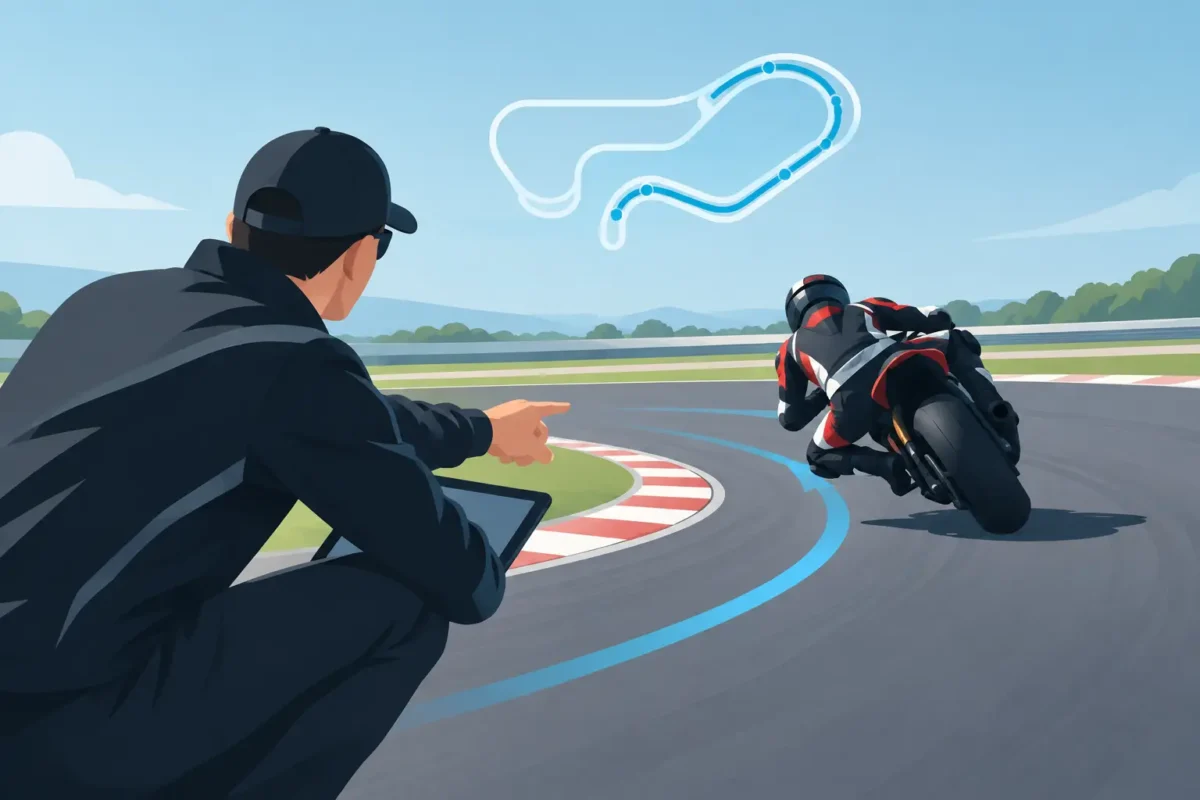
Good coaching is not someone telling you to “go faster”. It is an experienced rider watching how you approach a corner, understanding what the bike is doing beneath you, then giving you one usable action for the next session. It might be releasing the brake later but more progressively. It might be moving your turn point by half a metre. It might be holding a tighter line so you can pick the bike up earlier and drive harder.
The best feedback is specific, immediate and linked to an outcome. “You are sacrificing exit because you turn in too early” tells you what is costing time. “Wait for that second kerb, turn once, then let the bike run” gives you a job to do. The difference matters. Vague advice creates noise; accurate feedback creates a reference you can repeat.
Circuit coaching also exposes the gap between feeling quick and being quick. A lap can feel wild because the inputs are abrupt, while the stopwatch says it is slower. Equally, a smooth, controlled lap can be far faster because the bike spends more time settled, pointed in the right direction and accelerating. That is why timing and coaching belong together.
Speed Starts With a Better Riding Plan
Most riders do not lose time because they lack commitment everywhere. They lose it through small compromises that repeat around every lap: braking a little too early, carrying unnecessary lean angle, missing an apex, picking the throttle up late or using all the track in the wrong place.
A coach helps build a plan for each corner rather than treating the lap as one long burst of effort. At fast circuits, that often means learning where restraint creates a stronger exit. At technical venues, it can mean prioritising the corner that feeds the next two. The fastest line is not always the most obvious line, and the hardest braking zone is not always where the biggest gain is waiting.
This is particularly valuable on unfamiliar European circuits. A circuit map tells you the layout. It does not show the crest that unloads the front as you tip in, the camber that rewards a later apex, or the exit kerb that tempts you wide before the bike is ready. A coach who knows the venue can shorten that learning curve without pretending there are shortcuts to riding well.
The first gains are usually not glamorous
Riders often arrive wanting to work on knee-down, late braking or top speed. Those things may come, but the early gains are more fundamental: vision, body position, braking pressure, turn point and throttle timing.
Look further ahead and the corner slows down. Support your body with your legs and the bars stop receiving panic inputs. Brake with a deliberate initial load and the fork settles before turn-in. These are not headline-grabbing changes, but they give you a stable platform to ride faster with less drama.
Why Live Feedback Beats Guesswork
Video is useful. Data is useful. Both are even more useful when an experienced coach can turn them into a practical instruction. Left alone, riders can spend an evening staring at traces or replaying onboard footage, then arrive at the next session with five changes in mind and no clear priority.
Live rider-to-rider intercom coaching cuts through that. Instead of trying to remember a debrief from twenty minutes ago, you receive a cue at the moment it matters: hold your line, wait for the turn, release the brake, pick it up. The aim is not to overload you with chatter. It is to reinforce one reference until it becomes automatic.
There is a trade-off. Intercom coaching is most effective when the rider already has enough circuit awareness to process instructions safely. If you are new to track riding, a lead-follow session, pit-lane briefing and simple post-session debrief may be the stronger place to start. The coaching should match the rider, not the other way round.
Timing Turns Feel Into Evidence
A reliable timing system makes progress visible. You can see whether a new line genuinely works, whether your best sector was a one-off, and whether consistency is improving across a full session. That evidence keeps the coaching honest.
Do not obsess over a single hero lap. Look for the spread between your fastest and average laps. If your quickest lap is strong but the next ten fall away, there is usually more time in repeatability than in another desperate attempt. Consistent braking references, cleaner exits and controlled tyre management are what allow pace to survive through a full day.
Timing also helps identify where a change has caused a compromise elsewhere. You may gain two tenths into a corner but lose four on the following straight because the exit has collapsed. That is not failure. It is useful information, and it is exactly the kind of pattern a good coach can spot before it becomes a habit.
Arrive Ready to Learn, Not Just Ready to Ride
Coaching works best when the practical side is handled before the first sighting laps. Set your controls so they suit you, check brake pads and tyre condition, and make sure suspension settings are sensible for your pace and the circuit. You do not need a race bike with every premium part fitted, but you do need a machine that gives clear, predictable feedback.
Your own approach matters as much. Set one objective per session. If the job is to hold a later turn point through a particular complex, do not abandon it because another rider comes past on the straight. Let them go. Track days are not races, and trying to win an imaginary battle is a quick route to poor decisions.
Write down the coach’s key point after each session. Keep it short: “Wait at Turn 5”, “Brake release smoother”, “Eyes to exit”. By day two, those notes reveal patterns in your riding that are easy to miss in the noise of fuel stops, tyre warmers and post-session adrenaline.
The Value of a Multi-Day Coaching Environment
One coached day can expose a breakthrough. Multiple days give you the chance to own it. The first sessions are often about understanding the circuit and establishing safe references. Once that workload reduces, you can focus on technique. By the final day, you can test whether the new approach remains intact when you are tired, the track is busy or conditions change.
That is why organised events matter. When transport, paddock support, timing and communication are handled properly, you have more mental bandwidth for the riding. Race Shift builds its European track events around that rider-first standard, pairing world-class circuits with professional coaching, pro-level timing and the operational support serious riders expect.
There is also value in the garage around you. Riding with committed people raises the standard without turning every session into a contest. Listen to how faster riders talk about references, tyre behaviour and corner exits. Share what worked. Ask better questions. Ride faster. Ride smarter. Ride together.
Choose a Coach Who Can Meet You Where You Are
An elite racer’s CV is meaningful, but the ability to communicate is what turns experience into your lap time. Look for a coach who watches before prescribing, explains the reason behind the instruction and is willing to adapt the plan as your confidence develops.
The right coach will not force a racer’s style onto every rider. Body shape, bike set-up, experience and circuit conditions all affect what works. They will challenge you, because progress demands it, but they should never rush you beyond the point where you can still process the task safely.
Your next breakthrough may not feel spectacular from the saddle. It may be one calmer release of the brake, one cleaner apex or one earlier drive onto a long European straight. Stack enough of those moments together and the stopwatch cannot argue. That is the real payoff of coaching: speed you understand, speed you can repeat, and more reasons to come back for the next session.
