
Uncategorised
Motorcycle Transport for European Track Days
Sep
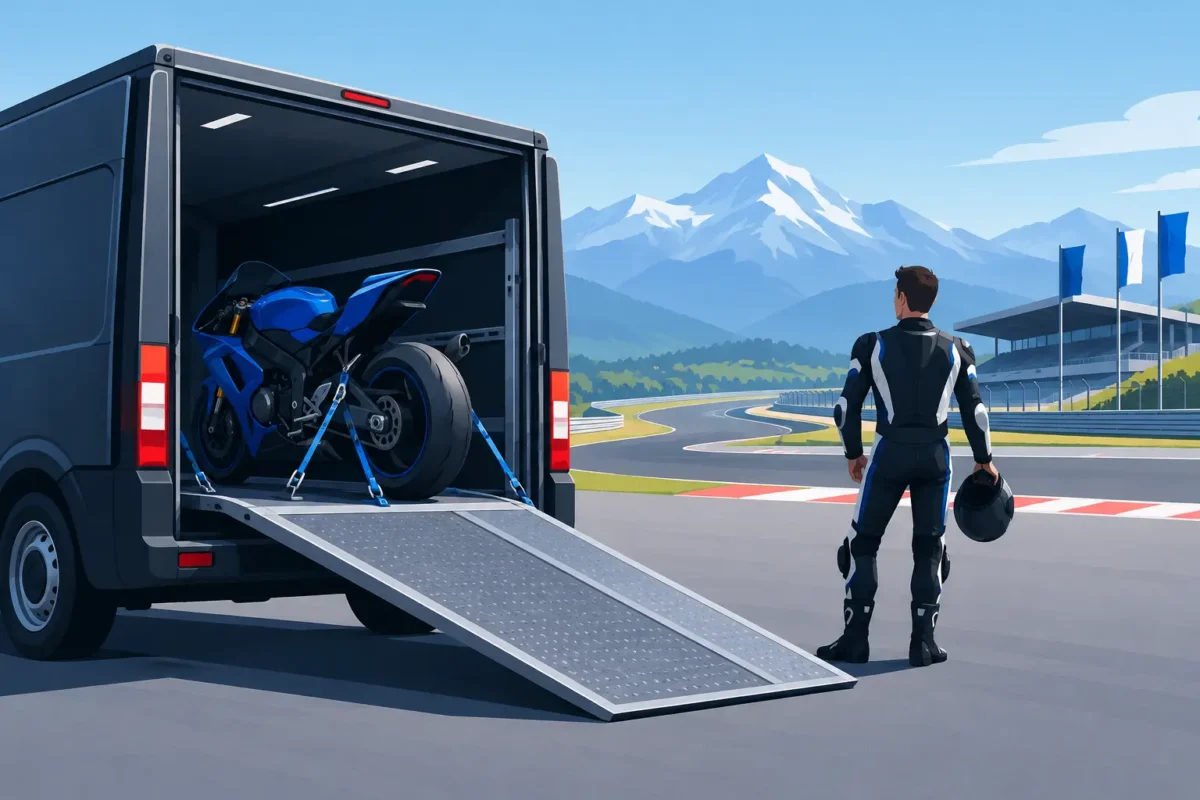
A European track day should begin in pit lane, not with a 1,000-mile motorway slog, a frantic tyre change in a foreign car park or questions at the border. Professional motorcycle transport puts your bike where it belongs: at a world-class circuit, secured, supported and ready for the first sighting laps.
For serious UK riders, transport is not an add-on. It is the difference between arriving fresh enough to focus on braking markers and arriving depleted before the first session has even started. Get the logistics right and your time away becomes about throttle control, data, coaching and progression. Get them wrong and the circuit becomes the easy part.
Why motorcycle transport changes the whole event
Riding or towing to Europe has its place. If you are combining a track day with a touring holiday, have a race van set up exactly as you like it, or need complete freedom over your route, doing it yourself can make sense. But for a multi-day circuit event, the hidden cost is not only fuel, tolls, hotels and ferry crossings. It is energy.
A rider who flies out, collects their kit and meets a properly transported machine can spend the evening learning the paddock, checking tyre pressures and resting. A rider who has driven through France or Spain may be unloading in the dark, managing a mechanical issue and trying to remember whether the rear axle is still where it should be. That is not the preparation you want before chasing an apex at speed.
The right service also reduces the number of moving parts. You do not need to arrange a trailer, work out overseas breakdown cover for a loaded vehicle, find secure overnight parking or build extra travel days into an already limited calendar. You retain the important decisions – tyres, suspension settings, fuel, gearing, coaching goals – while specialists handle the heavy logistics.
There is a trade-off. Transport schedules have collection and return windows, and a professional operator needs your bike and equipment ready on time. That structure is a benefit when it is clear from the start. It allows the lorry, paperwork and circuit delivery plan to run properly for every rider on board.
What premium motorcycle transport should look like
Not all bike transport is built for track machinery. A road motorcycle travelling occasionally in a general haulage van is one thing. A performance bike heading to a European circuit, often with warmers, stands, spare wheels and expensive bodywork, needs a system designed around the job.
Secure stillages, not improvised restraint
Your motorcycle should travel in a purpose-built stillage that holds it upright and stable without relying on a collection of straps pulling hard across the suspension. Proper containment matters on long European routes, through loading ramps, ferry crossings and paddock unloading. It protects the bike from movement and makes loading consistent from one machine to the next.
Ask how the bike is secured, whether the transport equipment is purpose-built for motorcycles, and what happens to your machine between collection and circuit arrival. Vague answers are a warning sign. A serious operator should be able to explain the process plainly because they use it every trip.
Kit that arrives with the bike
Track days are won and lost in the details. Leathers, helmet, boots, back protector, tools, tyre warmers and stands all have a job to do. Separating the rider from their equipment creates needless risk, especially when airlines have tight baggage rules or a delayed bag can leave you standing in the paddock with no kit.
Confirm exactly what can travel with the bike and how it must be packed or labelled. Heavy loose items need managing sensibly, and fuel, aerosols and other restricted materials may not be permitted. Do not assume. Pack to the operator’s rules, keep essentials organised and make every item easy to identify when the paddock is busy.
Collection that works around real riders
Multiple UK collection points remove a major piece of friction, particularly when the alternative is a long tow before the European journey has begun. Door-to-door collection can be even more valuable for riders with demanding work schedules, limited storage or no tow vehicle.
Convenience should not mean confusion. You need a confirmed location, handover time, preparation requirements and a named point of contact. Good communication is part of the transport service, not an afterthought once the bike is loaded.
Preparing your bike for transport and track time
The best transport operation cannot compensate for a bike that has been rushed onto the lorry with a loose fairing bolt and a worn chain. Prepare as if the first session matters, because it does.
Start with mechanical condition. Check brake pads and fluid, tyre life, chain adjustment, wheel fasteners, coolant requirements and any circuit-specific noise limits. If your tyres are close to their limit, replacing them before departure is often smarter than gambling on finding your preferred compound at the circuit. The same goes for common crash spares, particularly levers, rearsets and clip-ons.
Then make the bike easy to move and identify. Remove or secure loose accessories, leave the key as instructed, and attach your rider details clearly. Photograph the bike before handover, including fairings, wheels and any existing marks. This is not pessimism. It is the kind of disciplined preparation that keeps everyone accountable.
Your kit deserves the same approach. Use labelled bags or boxes, keep tools contained and avoid packing irreplaceable travel documents into luggage that may not be accessible during transit. Carry your personal essentials with you when flying: passport, licence, event details, medication and anything you cannot realistically replace in the paddock.
Paperwork is part of the race plan
Post-Brexit European motorcycle transport requires more than loading a bike and heading for the Channel. Temporary export and return arrangements, rider ownership details and border documentation need to be correct before the lorry leaves the UK.
For track bikes and equipment travelling temporarily, an ATA Carnet may be used to document goods crossing borders and returning home. It is not paperwork to skim at midnight before collection. Errors can delay a load, create extra cost or leave a rider dealing with a problem when they should be learning a circuit.
Provide accurate bike details when requested, including make, model, registration or frame information where applicable, and the stated value of equipment. Read the instructions, respond promptly and keep your own copies. If you are financing a bike, using a machine registered to someone else or carrying high-value extras, raise it early rather than assuming the standard process covers every situation.
Race Shift can organise the transport and ATA Carnet administration around its European events, which removes a substantial layer of admin from the rider’s workload. That does not remove your responsibility to supply correct information. It gives you a structured process and people who understand why the details matter.
At the circuit, protect your track time
The real value of professional transport becomes obvious once the paddock comes alive. Your motorcycle is unloaded, your kit is there, and you can put your attention into tyre pressures, fuel, briefing times and the first plan with your coach. No recovery from a road journey. No trailer to store. No return drive hanging over every session.
Use that headspace well. Walk or cycle the circuit if possible, identify reference points and listen to the riders who know the venue. Let timing show where you are improving, rather than chasing a lap time on cold tyres in session one. If coaching is available, arrive with one clear objective – later braking, better release into the corner, a cleaner exit – and build from there.
Transport also changes the end of the event. Instead of packing a tired bike into a trailer after the final chequered flag, you hand it back into an organised system and travel home with the satisfaction of a proper day’s riding still intact. That matters after several intense days on track.
Choose the service that matches your ambition
Cheap transport can look attractive until collection points are inconvenient, communication goes quiet or the bike arrives without the kit you expected beside it. Equally, the most elaborate option is not automatically right if you are travelling with a simple road bike and minimal equipment. Match the service to the event, the value of your machine and the standard of experience you expect.
Ask direct questions before booking: how is the bike secured, what kit travels with it, what paperwork is included, when are collection and delivery windows confirmed, and who supports you if something changes? The answers tell you whether the operator understands track days or simply moves motorcycles.
Your bike should arrive ready for the circuit. You should arrive ready to ride faster, ride smarter and meet the apex with a clear head.
